



Atlas is the <b>analytics system of record</b> that catalogs, certifies, and governs every analytics asset across your enterprise. It provides teams and AI agents with a single source of truth for all reports, dashboards, KPIs, and metrics.
Request Demo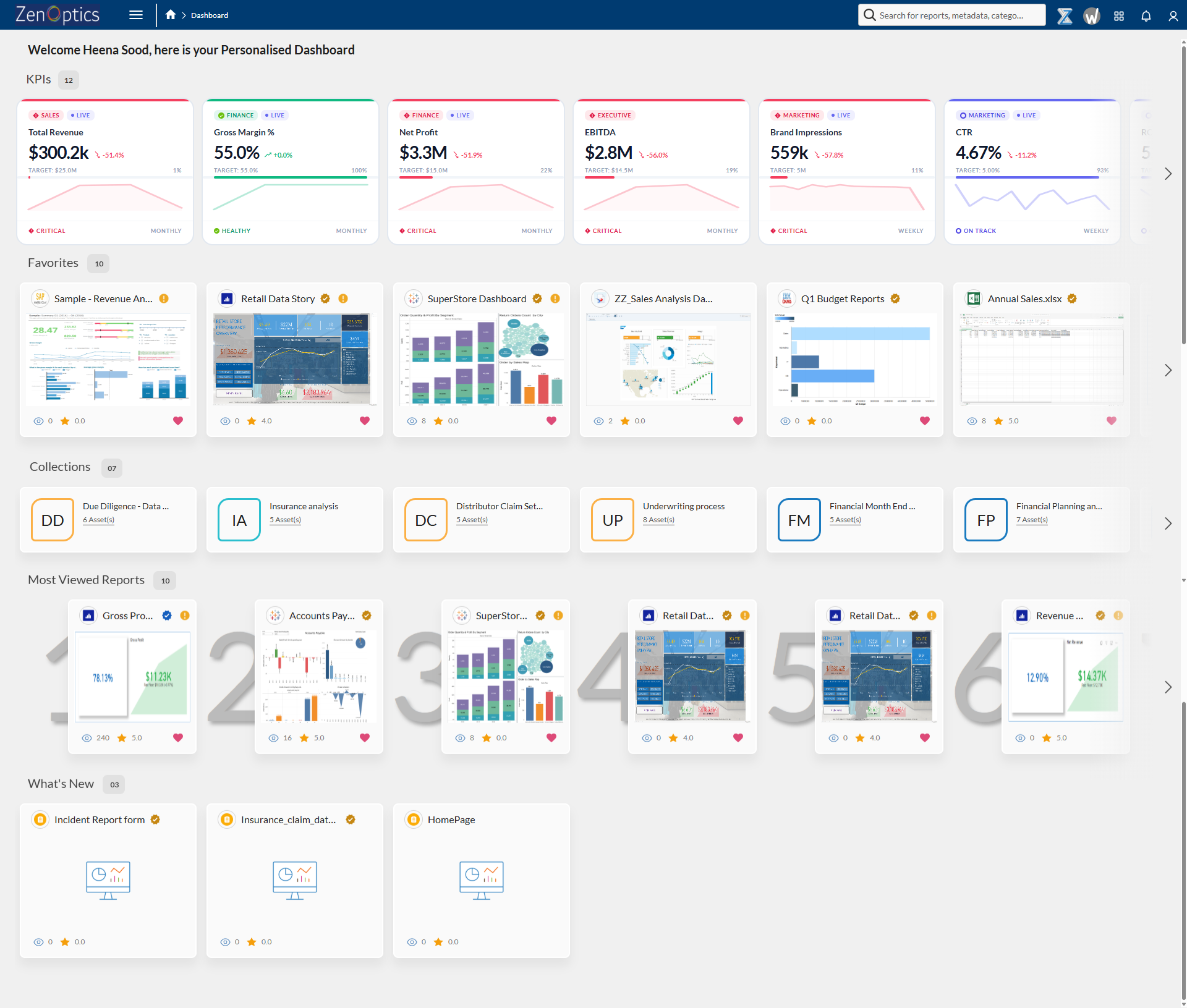
As organizations scale analytics across teams, tools, and domains, dashboards and metrics proliferate rapidly. Over time, this growth leads to duplicated content, inconsistent definitions, unclear ownership, and declining trust in analytics.
Atlas addresses this challenge by providing a centralized, authoritative view of analytics so organizations can understand what analytics exist, which ones should be trusted, and how they are governed.
Unlike traditional data catalogs that focus on tables, schemas, and pipelines, Atlas is built specifically for analytics consumption. It centers on dashboards, reports, metrics, and business concepts.
Atlas automatically indexes analytics assets across BI platforms, capturing metric definitions, lineage, ownership, and usage patterns. This enables fast discovery of relevant analytics and reduces wasted effort recreating reports that already exist.
Atlas embeds analytics governance directly into the analytics lifecycle. Instead of treating governance as a separate, centralized process, Atlas enables governance where analytics are created and consumed.
Organizations can define authoritative metrics, certify dashboards, manage changes, and assign accountability through lightweight workflows that align with how teams work. Governance becomes continuous and business-driven, rather than slow and restrictive

A human-facing interface with search and discovery services where users can find and access analytics assets across all connected BI platforms. Atlas automatically indexes reports, dashboards, and metrics, enabling fast discovery regardless of the underlying tool.

Catalogs dashboards, reports, and metrics across the enterprise, capturing definitions, lineage, ownership, and usage patterns. This analytics metadata store provides contextual understanding of how analytics assets relate to each other and to business domains.

Supports certification, approval, and change workflows that allow organizations to define authoritative metrics, certify dashboards, manage changes, and assign accountability through lightweight governance processes aligned with how teams work.

These systems remain the systems of engagement where analytics are authored and consumed.

Analytics automation is powerful functionality that is supportive of business processes, analytical analyses and regulatory filings through consistent and scheduled gathering of reports, dashboards, visualizations, and KPIs.

Analytics collaboration is the ability to keep business users and their information connected by establishing a knowledgebase of sharing feedback, comments and collaboration features that are directly connected to each report and dashboard.
Unlike traditional data catalogs that focus on tables, schemas, and pipelines, Atlas is built specifically for analytics consumption. It centers on dashboards, reports, metrics, and business concepts — the assets business users actually rely on to make decisions.
Atlas automatically indexes analytics assets across BI platforms, capturing metric definitions, lineage, ownership, and usage patterns. This enables fast discovery of relevant analytics and reduces wasted effort recreating reports that already exist.
Reports are organized by business domain with sub-categories that reflect organizational structure. Each report displays certification status, business ownership, and report type, so users can evaluate relevance before navigating to the source system.
Authoritative metrics are defined, dashboards are certified with ownership assigned, and changes are managed through lightweight analytics operations and governance workflows.
Atlas embeds analytics governance directly into the analytics lifecycle.
Instead of treating governance as a separate, centralized process, Atlas enables governance where analytics are created and consumed.
Organizations can define authoritative metrics, certify dashboards, manage changes, and assign accountability through lightweight workflows that align with how teams work.
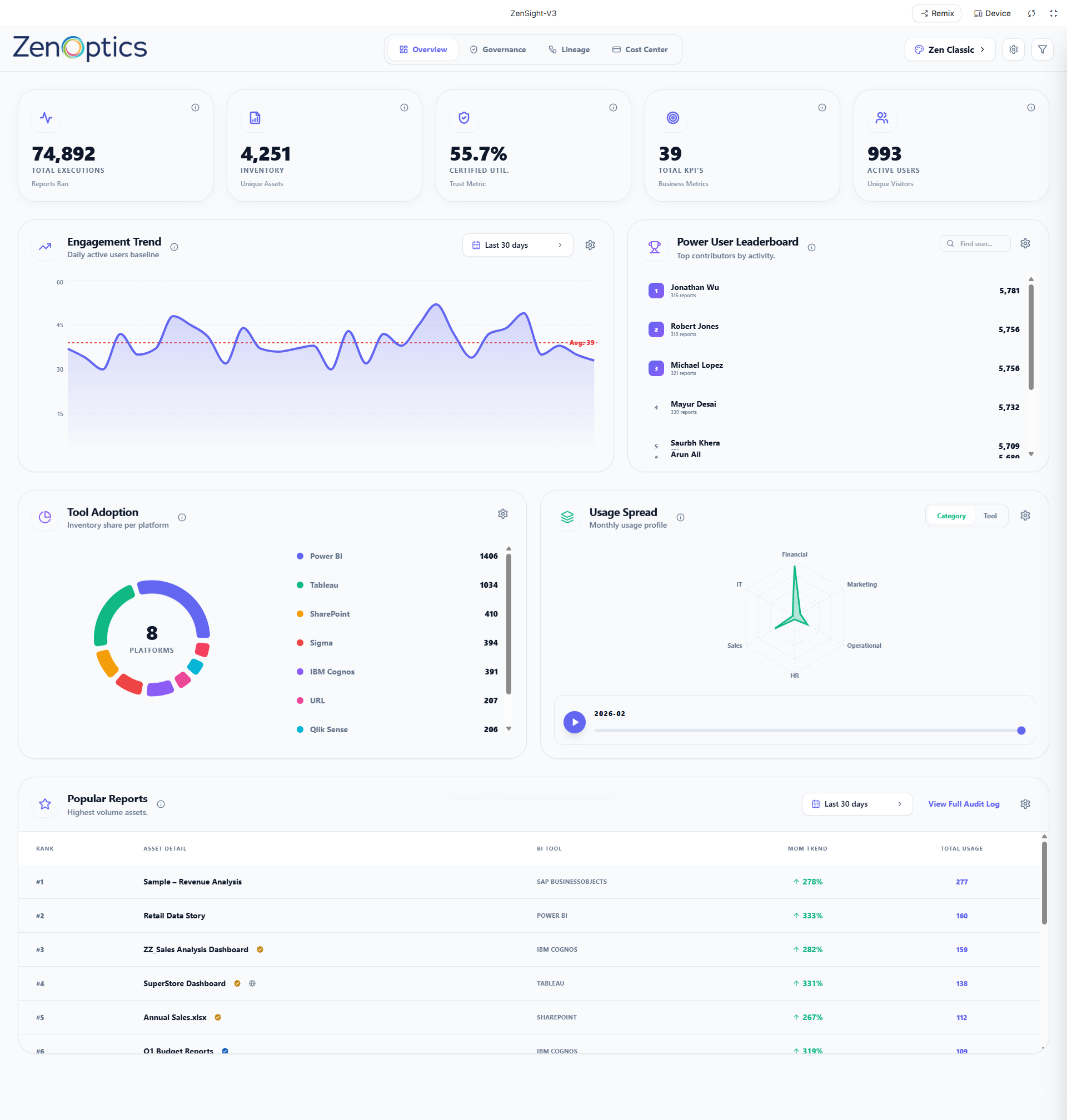
The governance dashboard surfaces certified versus uncertified assets, compliance rates across platforms and categories, and usage tracking data that helps data leaders identify which assets require attention.
Governance becomes continuous and business-driven, rather than slow and restrictive.
By aligning analytics owners, domain leaders, and stakeholders around shared definitions, Atlas prevents metric drift and analytics sprawl. Teams move faster because they no longer debate what numbers mean. They operate from a shared understanding of performance.
Atlas catalogs dashboards, reports, and metrics, capturing definitions, lineage, ownership, and usage patterns.
It makes analytics discoverable and understandable for humans, while embedding analytics operations and governance directly into the lifecycle.
Authoritative metrics are defined, dashboards are certified with ownership assigned, and changes are managed through lightweight analytics operations, catalog, and governance workflows.
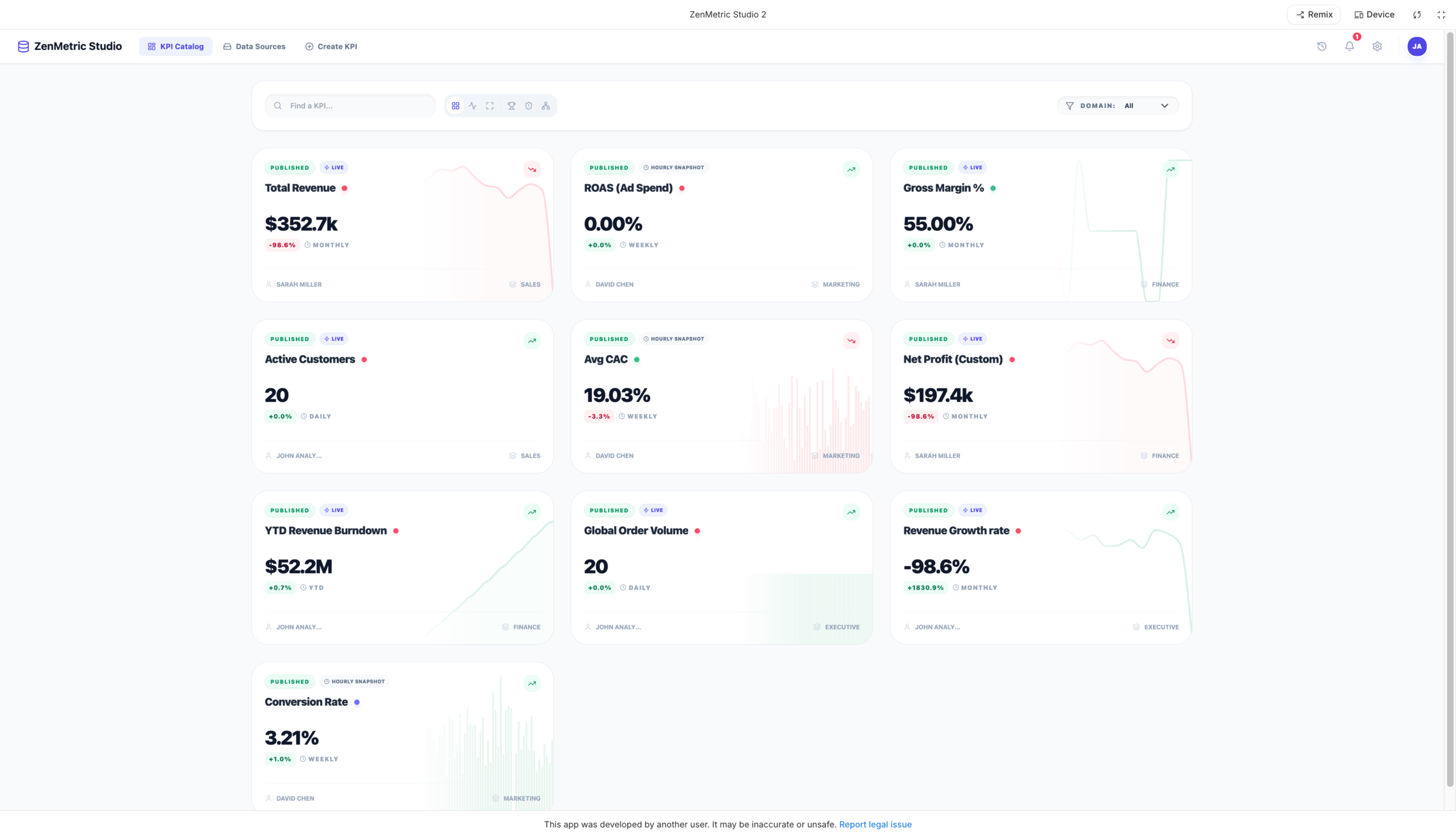
Each metric in the catalog is published with a clear definition, ownership, and status.
The catalog view surfaces trend indicators, update frequency, and department ownership for every KPI, so teams and AI systems can reference a single authoritative definition rather than debating what numbers mean.
Atlas tracks ownership, lineage, and usage patterns across the entire analytics ecosystem.
The overview dashboard surfaces engagement trends and adoption rates across connected BI platforms, helping analytics leaders understand which assets are driving value and where resources are being consumed without impact.
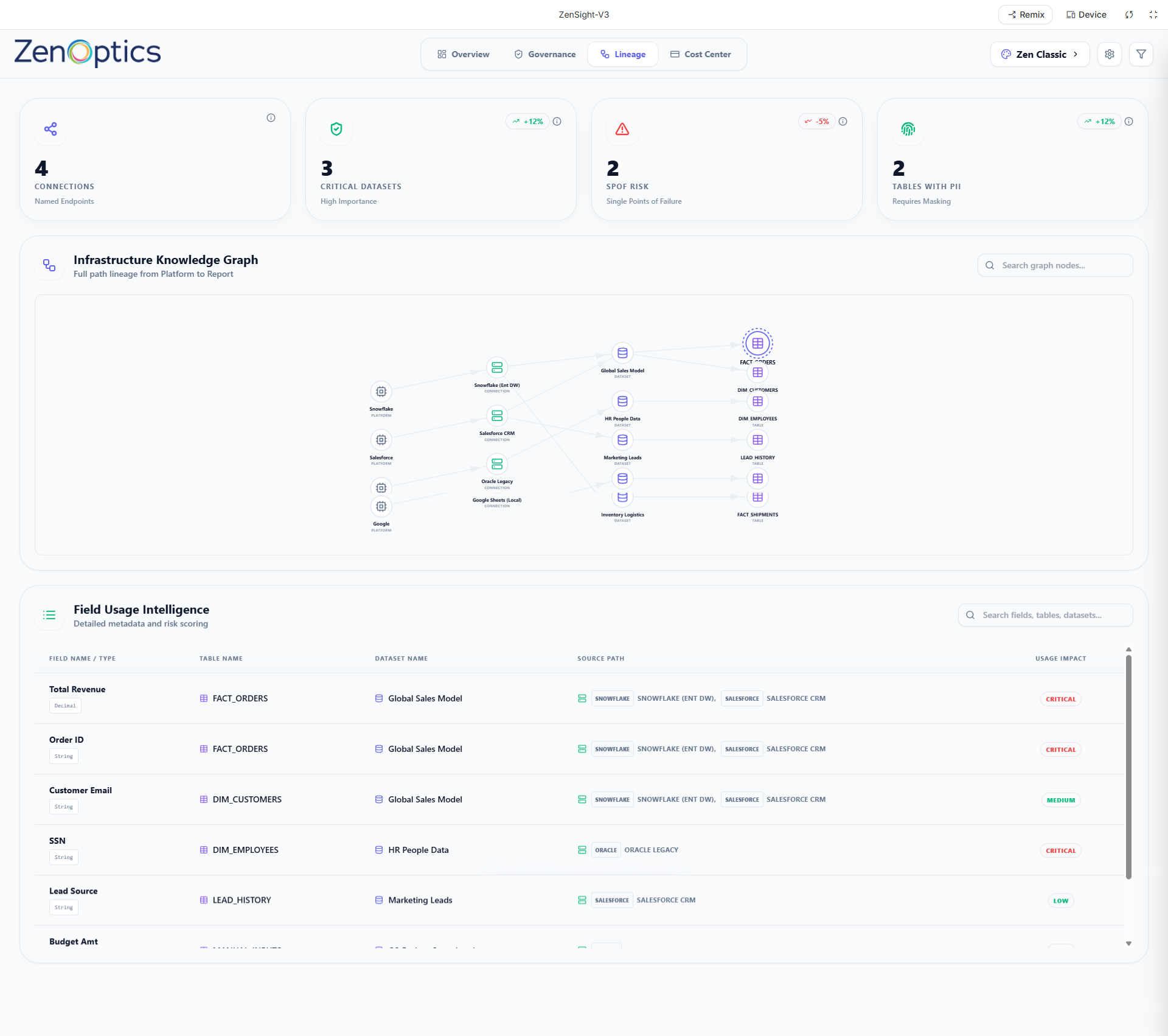
The lineage view maps relationships between data sources, datasets, and downstream analytics assets.
Atlas exposes governed analytics metadata through internal APIs, ensuring downstream systems consume only trusted, authoritative analytics definitions.
When a data source changes, teams can trace the impact across reports and business decisions.

Discover trusted analytics quickly and make decisions with confidence. Atlas provides a single place to find certified reports, dashboards, and metrics across all connected BI platforms.

Reduce duplication, rework, and maintenance overhead. Atlas gives analytics teams complete visibility into what exists across platforms, enabling better lifecycle management and reduced redundancy.

Gain visibility, consistency, and control across the analytics ecosystem. Atlas establishes a trusted foundation for analytics at scale, ensuring every dashboard and metric is discoverable, understood, and governed

Higher % of metrics with clear ownership

More dashboards certified and trusted

Reduction in duplicate dashboards

Faster analytics discovery time

Increased usage of trusted vs non-trusted analytics
Atlas answers a fundamental enterprise question: What analytics do we have, which ones should we trust, and how are they governed?


