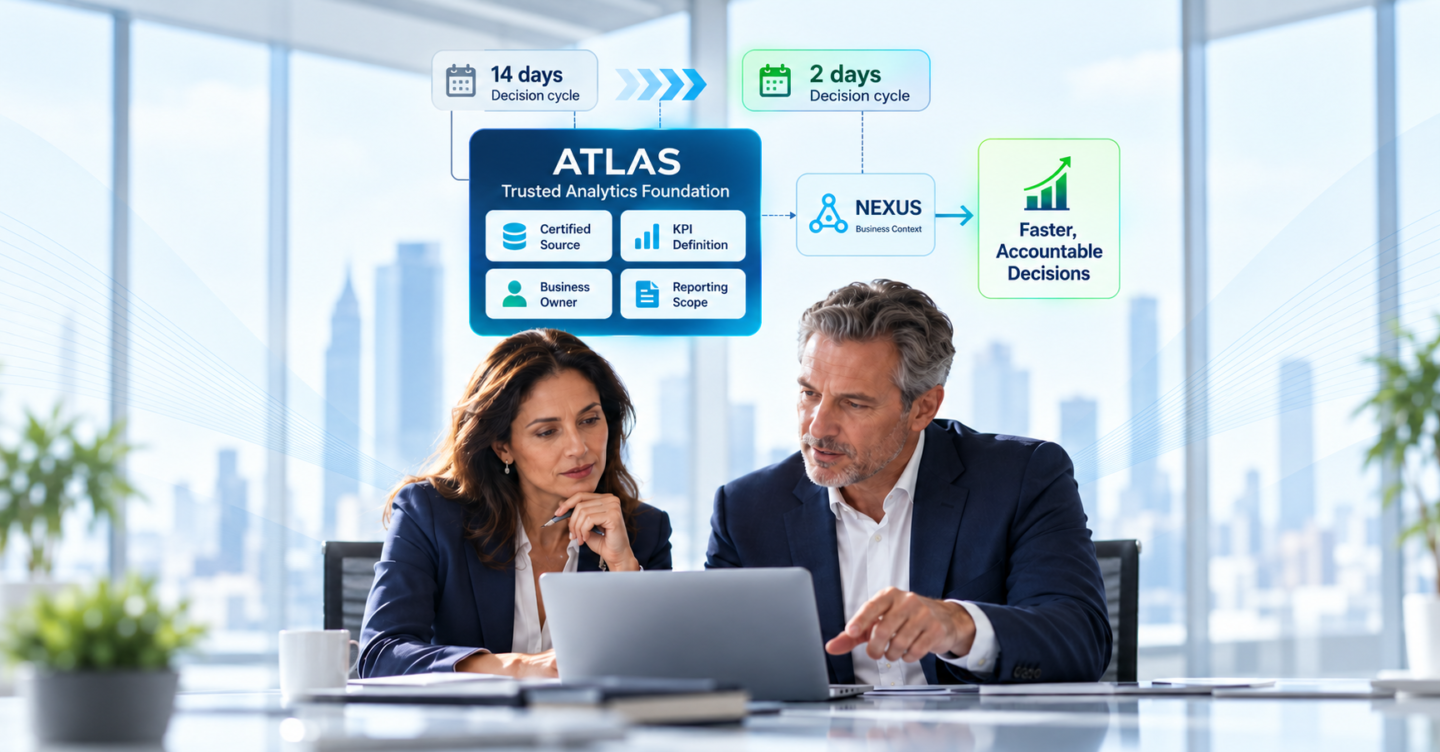
ZenOptics was recognized as a Sample Vendor in Gartner® Hype Cycle™ for Data and Analytics Governance, 2026 | Learn more
"Every major insurance decision — pricing risk, managing claims, setting reserves — depends on trust in the numbers. But the same KPI can mean different things to different teams. When that happens, decisions slow down and risk increases."
Unify fragmented insurance analytics. Give AI the right context. Operationalize decisions with confidence.
ZenOptics helps insurers understand their BI estate, unify trusted analytics, activate BI metadata as AI-ready context, and embed that intelligence into governed business workflows.
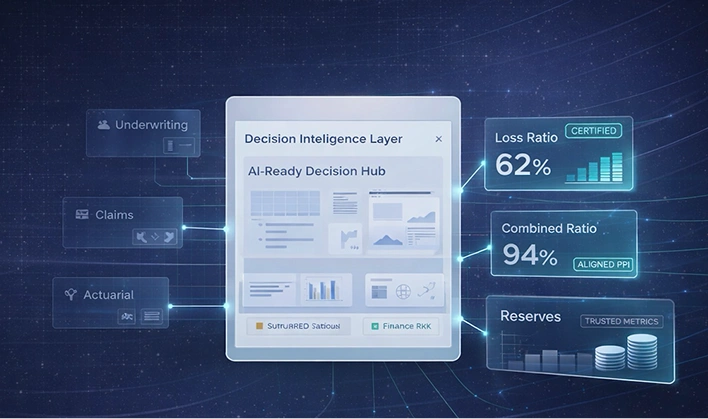
Insurance systems generate massive volumes of data. But decisions break when KPI definitions are not aligned across teams and tools.

Ask three teams what "loss ratio" means and you'll get three different calculations — depending on whether underwriting, claims, or finance runs the report.

Claim severity, cycle time, reserve estimates — each system calculates them its own way. The numbers exist, but they don't agree.

KPI definitions live inside individual reports, not in a shared layer that everyone pulls from.
Disconnected KPI definitions create systemic risk across the insurance value chain

Insurance enterprises often operate across SAP BusinessObjects, Tableau, Power BI, SSRS, Cognos, and department-specific reporting layers. The claims team may rely on one loss ratio report in Tableau, while finance uses a different version from SAP BusinessObjects — each with different definitions for incurred losses or earned premium.
ZenOptics BI Ops gives insurers a complete operational view of their analytics footprint across all BI tools.
 Identify duplicate loss ratio dashboards across finance and underwriting Determine which claims operational reports in SSRS are still actively used Map where reserve reports differ between actuarial and finance environments See which legacy dashboards can be retired as teams move to modern BI
 Inventory of reports, dashboards, and KPI assets across platforms
 Usage analytics by team, role, and tool
 Duplicate and orphaned report detection
 Legacy modernization and retirement visibility
 Rationalization insights for BI consolidation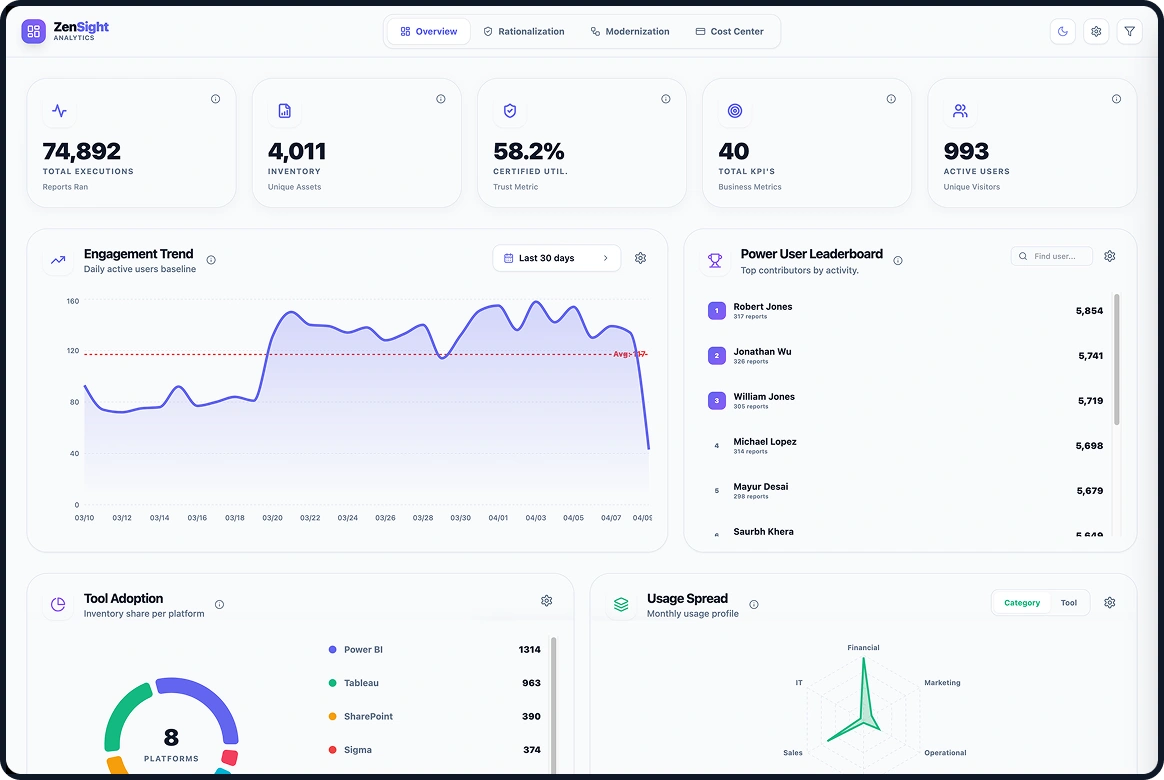
Underwriting may use one combined ratio report, while finance uses another with different expense allocations. Atlas gives each team a single certified view of the KPIs they depend on.
Underwriting teams find the certified portfolio profitability dashboard by line of business Claims leaders access trusted severity, leakage, and cycle time reports in one place Finance works from a single certified definition of combined ratio and expense ratio Actuarial teams align on trusted reserve adequacy and loss trend analytics Unified analytics catalog across all BI tools
 Certified dashboards and KPI definitions
 Ownership, stewardship, and governance workflows
 Persona-based views for underwriting, claims, finance, actuarial, and operations
 Faster discovery and adoption of trusted analytics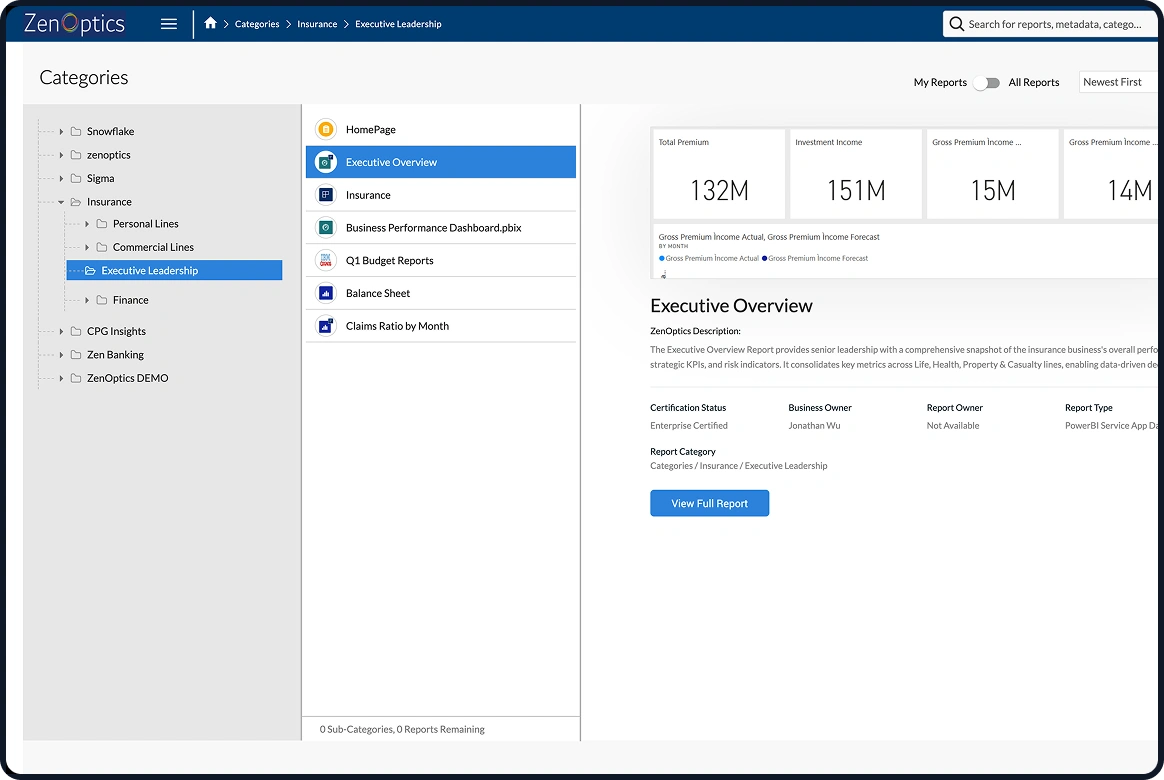
AI copilots can answer questions about claims or reserves, but without shared context they produce inconsistent results. Nexus activates the meaning in your BI metadata and turns it into an AI-ready context layer.
A copilot answers: "Why did loss ratio increase in commercial auto last quarter?" using the certified KPI and trusted underwriting dashboards AI explains which factors are driving claims cycle time increases by region and claim type Finance and actuarial teams receive consistent answers to questions about reserving trends Operations leaders ask: "Which service KPIs are below target this month?" and get answers mapped to certified metrics AI understanding of certified KPI definitions
 Semantic relationships between metrics, reports, and hierarchies
 Cross-tool business context for copilots and agents
 Consistent AI answers grounded in trusted analytics
 Faster AI deployment without rebuilding a semantic layer from scratch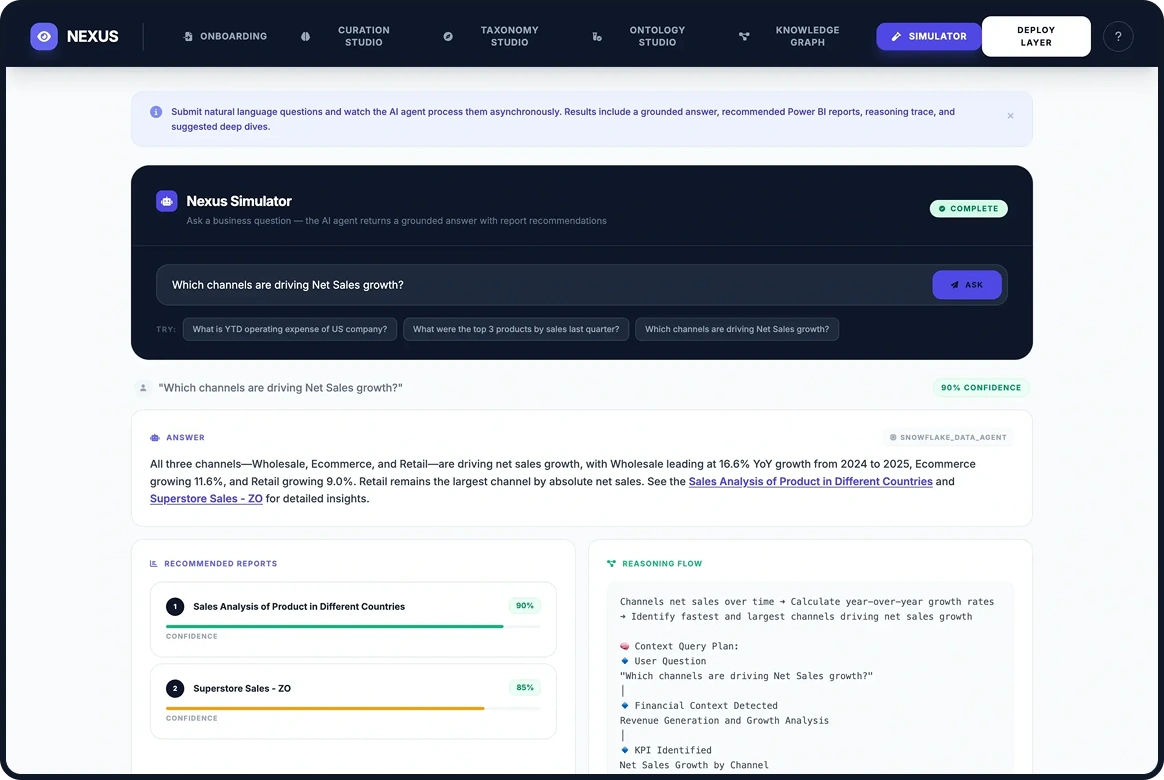
Claims triage, underwriting reviews, reserve monitoring — these decisions are often spread across emails, reports, and disconnected systems. Maestro turns trusted analytics and AI into repeatable, governed workflows.
Claims triage workflow: prioritize claims using certified severity and leakage analytics Underwriting review workflow: route underperforming portfolios for review using trusted profitability metrics Reserve monitoring workflow: flag variance trends and assign review tasks to finance and actuarial teams Fraud escalation workflow: connect anomaly analytics to governed investigative steps Operational service workflow: trigger action when SLA or cycle time KPIs fall below threshold Structured workflows tied to trusted analytics
 AI-assisted decision steps with guardrails
 Monitoring and governance for AI-driven recommendations
 Decision traceability from KPI to recommendation to action
 Repeatable operational playbooks across insurance functions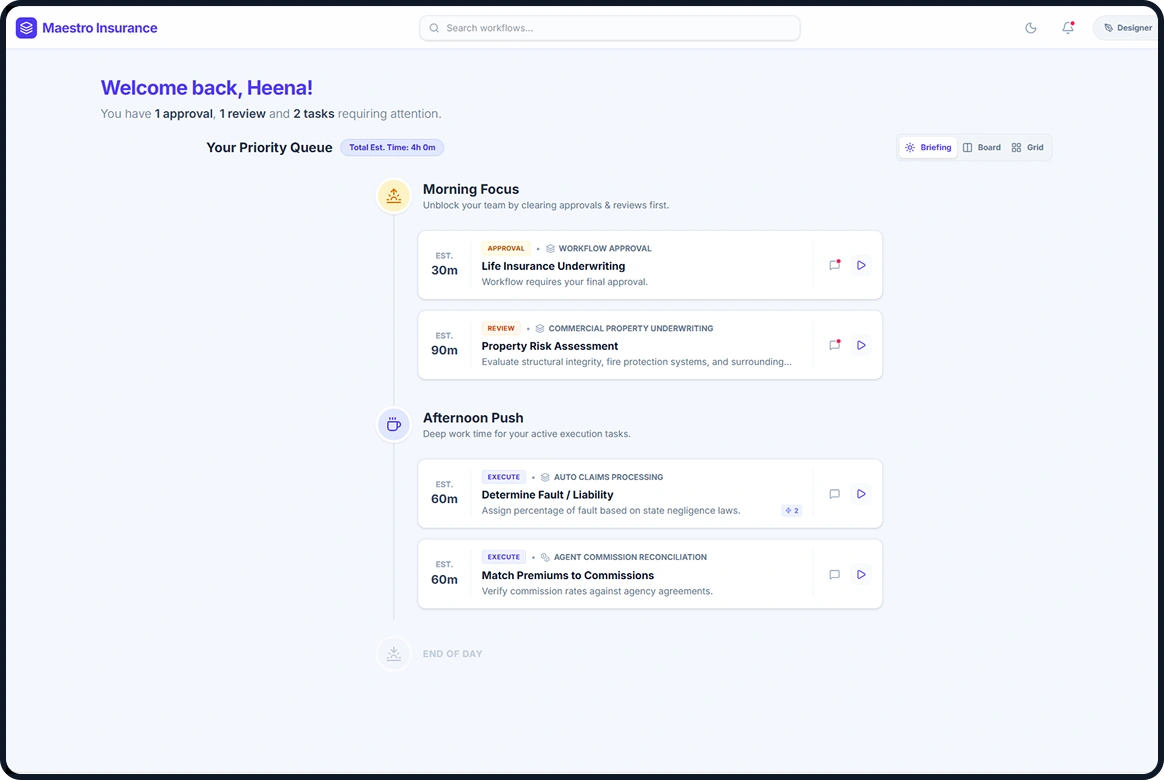
From fragmented analytics to trusted, decision-ready intelligence
Get Demo
Consistent KPI definitions across underwriting, claims, actuarial, and finance

Faster, more confident decision-making across the policy lifecycle

Reduced manual reconciliation across teams and reporting cycles

Improved audit readiness with clear lineage and ownership

AI systems that deliver consistent, explainable outputs
“Insurance is ultimately a business of risk — and managing that risk depends on decisions you can trust. Our vision with ZenOptics is simple - To create an environment where every decision in an insurance organization — whether made by a human or an AI system — is grounded in trusted metrics, understood in a consistent context, and executed with full accountability. That’s what we believe will define the next generation of insurance leaders. Not who has the most data, but who can turn that data into aligned, explainable, and repeatable decisions at scale.”
When metrics mean the same thing everywhere, decisions become faster, clearer, and scalable