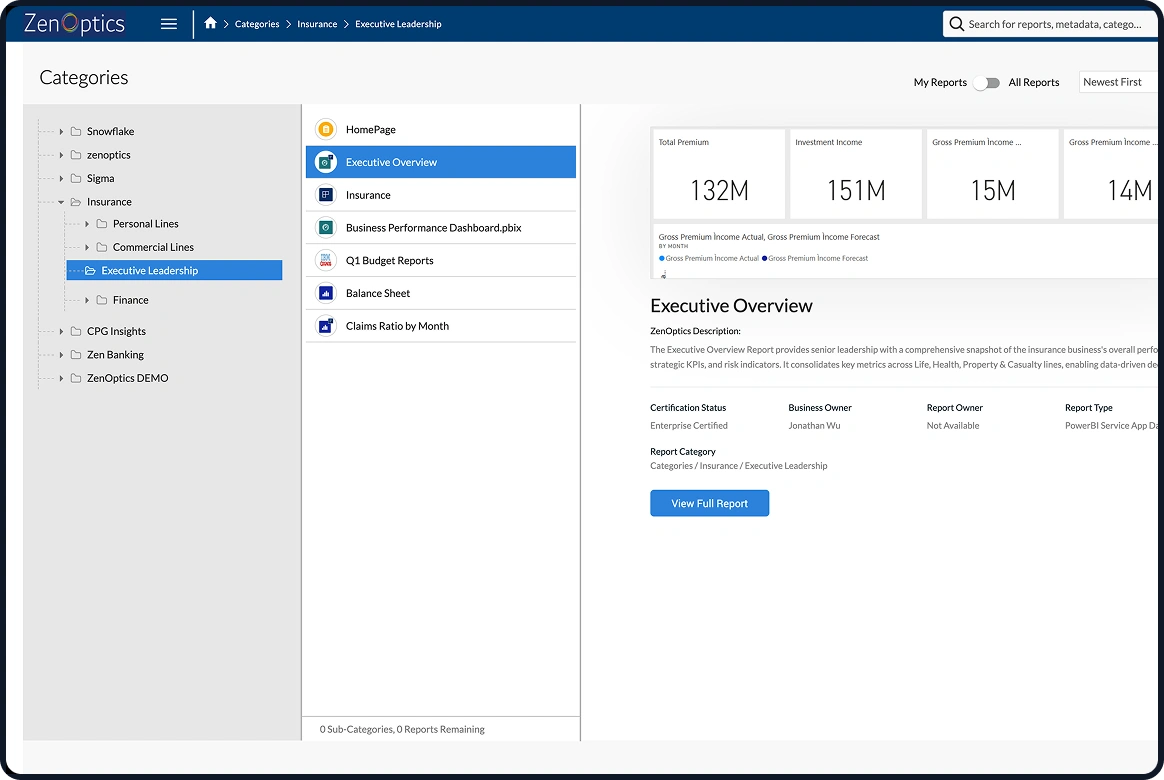


Enterprise organizations have invested heavily in data catalogs, enriched schemas, governed lineage and quality pipelines. Yet their analytics AI can still return inconsistent answers, select the wrong KPI or rely on an outdated report. The instinct is often to add more sources, enrich more metadata or improve retrieval. Those investments matter, but they cannot resolve ambiguity that exists in the analytics layer itself.
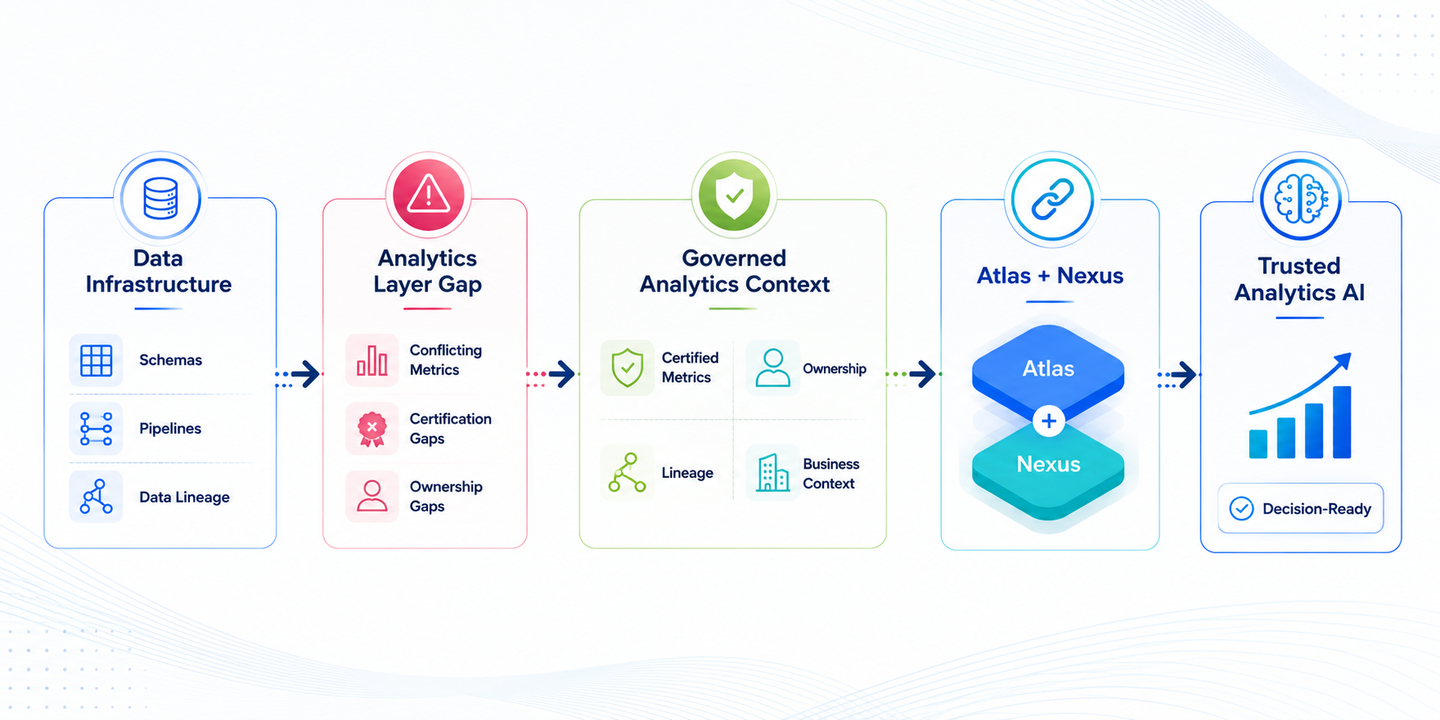
The problem is that enterprise analytics AI failures are often not data infrastructure failures. They are analytics layer failures. Closing that gap requires a governed analytics context layer that gives AI access to certified metrics, ownership, lineage and the business relationships behind enterprise decisions.
Why More Data Alone Cannot Fix Analytics AI
The pattern is familiar. An AI agent returns an inconsistent metric. A natural-language query produces an answer that no finance team member can reconcile with their own reports. An executive review finds the AI-generated summary used a revenue definition that has not been current for two years. The response: check the pipeline, audit the schema, add more context to the retrieval layer.
For data-layer failures, this is correct. Retrieval techniques and better data infrastructure address the data layer and will help when the underlying problem is there.
But a distinct layer above the data infrastructure often remains inconsistently governed: the analytics layer. This is the estate of reports, dashboards, certified metrics, KPI definitions, business ownership assignments, and certification records that represents how the organization translates data into business decision support. When analytics AI fails because of conflicting metric definitions, stale certifications, uncertified assets or ownership gaps, improvements to the underlying data infrastructure alone cannot resolve those governance conditions.
The analytics layer requires governance that complements data governance. In many enterprises, that governance remains fragmented across BI tools, business units and individual reporting teams. Business units have built their own metric definitions. Certifications from earlier governance cycles have not been reviewed as business logic changed. Reports that were created for specific projects were never retired and now appear alongside authoritative sources in any search or retrieval result. AI reasoning over this estate reads the same ambiguity that human analysts navigate every day, except at scale and with no organizational knowledge of which source to trust. Adding more data to an ungoverned analytics estate does not reduce that ambiguity.
What Data Context Provides and Where It Stops
The context that data catalogs, schema registries, and governed lineage provide to AI systems is real and valuable: technical metadata, source-to-destination lineage, data quality signals, schema definitions, and pipeline-level documentation. This data context tells an AI system where data comes from, what it means structurally, and whether it passed quality checks at the infrastructure level.
Data context alone may not establish which metric definition is authoritative for a particular reporting context, whether its certification remains current, who owns the KPI, or whether an analytics asset is certified, outdated or still appropriate for enterprise decision-making. Those signals must come from governance of the analytics estate.
Consider an organization with a well-governed data estate. Schemas are documented. Lineage is tracked. Quality pipelines flag anomalies. But the BI tools on top of that infrastructure contain two hundred dashboards with seventeen different definitions of customer churn, reports built for a specific acquisition scenario that were never retired, and key KPI certifications last reviewed before the company changed its revenue recognition policy. An AI agent querying that estate reads the BI layer, not only the data infrastructure. The well-governed data below does not resolve the ambiguity above it.
Graph-enhanced retrieval can improve how AI discovers and connects information across an enterprise. But retrieval cannot independently establish governance signals (such as certification, ownership and lifecycle status) when those signals have not been defined in the underlying analytics estate. This is the focus of analytics context engineering: the organizational discipline of structuring the analytics layer so AI systems can reason over it correctly.
The Four Foundations of Governed Analytics Context
The analytics layer requires its own governance, separate from and in addition to data infrastructure governance. That governance has specific components.
Metric certification with designated authority. An organization may have dozens of definitions of the same metric across teams and tools. Governed analytics context requires an authoritative metric definition for each approved reporting context, expressed in a machine-readable form and supported by current certification status. What metric certification requires goes beyond labeling: it includes ownership, review cadence, and the organizational process that keeps certifications aligned with current business logic.
Ownership with accountability and review cycles. A certified metric reviewed two years ago may reflect business logic that has since changed. Governed analytics context requires that each certified metric have a current, accountable owner responsible for keeping the certification valid. When business logic changes, the certification must be reviewed. Without review cycles and ownership accountability, certifications decay silently while AI systems continue to ground on outdated definitions.
A governed analytics catalog. AI systems querying an analytics estate need to know which assets the organization considers certified for decision support and which are shadow reports or legacy content. A governed analytics catalog provides that distinction as a governance signal in the metadata, so AI reasoning paths can weight certified sources appropriately.
Lineage from certified metrics to data source dependencies. A certified metric that references a data source that has since changed (schema migration, pipeline deprecation, source system update) may be internally consistent while computing against the wrong underlying data. The governance failures that produce each class of wrong AI output include exactly this category: lineage breaks that AI systems cannot detect without explicit governance records.
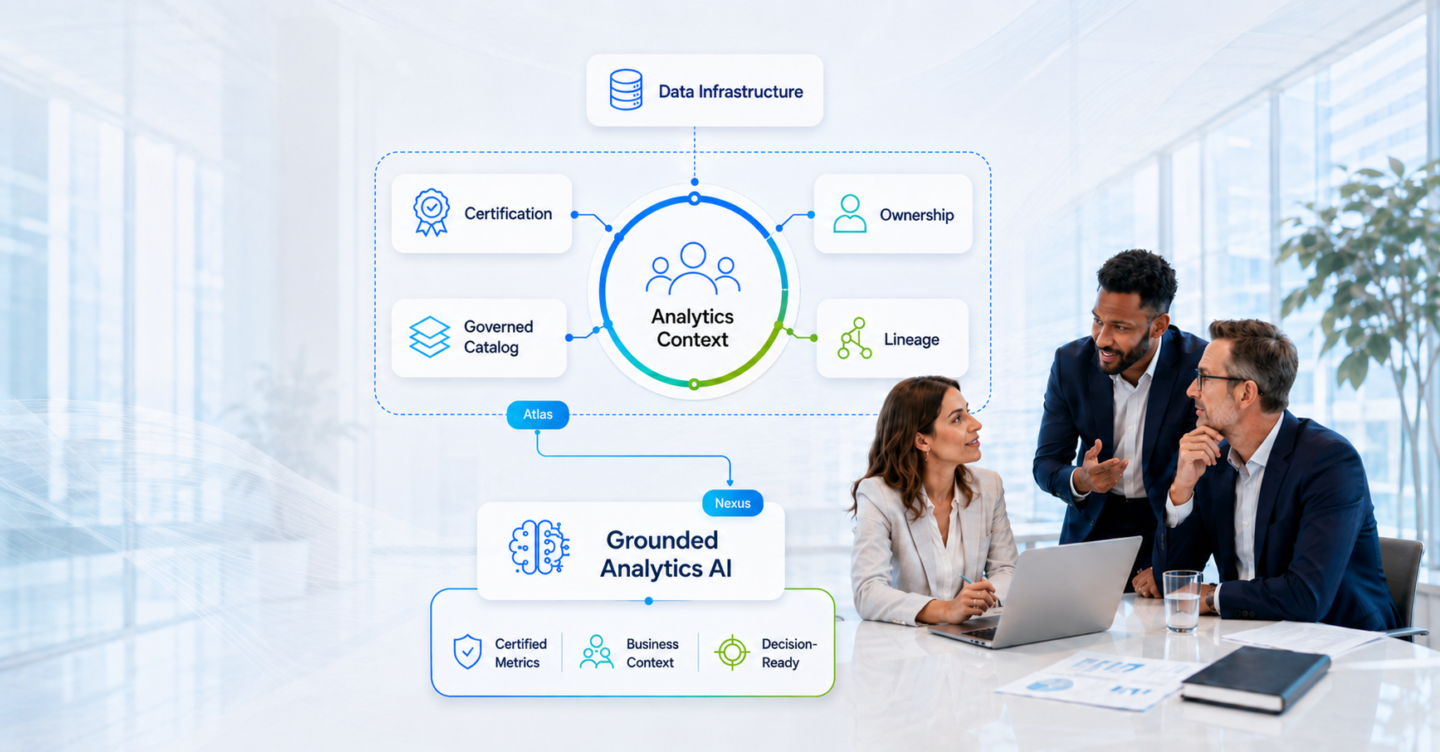
Together, these four components describe what "better context" means for enterprise analytics AI. They are not features of the data infrastructure. They are features of the analytics governance layer.
What Changes When the Analytics Layer Is Governed
When organizations certify metric definitions, maintain accountable ownership, govern analytics assets and track lineage to underlying dependencies, AI systems can operate with clearer authority signals and more consistent context.
This can improve consistency by reducing ambiguity between metric versions. It strengthens auditability by making certification records, ownership assignments and lineage paths traceable. It also helps sustain trust over time by connecting certifications to accountable owners and review cycles.
Model capability alone cannot resolve these governance gaps. The improvement is in the context the models receive. Governed analytics context is machine-readable: certified definitions, ownership records, certification status, lineage dependencies. AI systems that receive this context do not need to infer which version of a metric to trust. They read the governance record.
ZenOptics addresses this gap through Atlas and Nexus. Atlas establishes the governed analytics system of record across BI and analytics tools, bringing together asset inventory, certification workflows, ownership, lifecycle governance, usage intelligence, lineage and dependency visibility. Nexus builds on that governed foundation by curating business meaning and transforming analytics metadata into machine-readable context for copilots, agents and other AI experiences. Together, they address the analytics context gap that data infrastructure investment alone cannot close.
Frequently Asked Questions
Why doesn't improving data infrastructure fix enterprise analytics AI?
Data infrastructure improvements address the data layer: schemas, pipelines, quality, technical lineage. Enterprise analytics AI failures often occur at the analytics layer above the data infrastructure: conflicting metric definitions, stale certifications, uncertified sources, and governance gaps in the BI estate. These conditions exist regardless of the quality of the data underneath them. An organization can have a well-governed data estate and still have an ungoverned analytics layer, and AI systems reasoning over that layer will read the same ambiguity that human analysts navigate.
What is analytics context and how is it different from data context?
Data context is technical: schemas, lineage, quality scores, documentation at the pipeline or table level. Analytics context is organizational: certified metric definitions with designated authority, ownership and review cycles that keep certifications current, a governed catalog that distinguishes certified from uncertified analytics assets, and lineage from certified metrics to their data source dependencies. Data context and analytics context address different layers and require different governance interventions.
What does governing the analytics layer actually involve?
Governing the analytics layer involves four interconnected capabilities: certifying authoritative metric definitions with designated authority for each reporting context; assigning accountable owners with responsibility for keeping certifications current through review cycles; maintaining a governed analytics catalog that distinguishes certified assets from uncertified and legacy content; and tracking lineage from certified metrics to their data source dependencies. Each of these is an organizational governance process, not a data infrastructure capability.
How do Atlas and Nexus address the analytics context gap?
Atlas governs the analytics layer: cross-tool certified inventory, certification and approval workflows, ownership and accountability tracking, analytics asset lifecycle governance, and lineage and dependency records. Nexus converts that governed analytics estate into machine-readable context for AI systems, making certified definitions, ownership records, certification status, and lineage available to AI agents in a structured form. Together, they provide the governed analytics context AI systems need to interpret enterprise metrics with greater consistency, traceability and alignment to approved business definitions.
Do organizations need to choose between data infrastructure and analytics context?
No. Data infrastructure investment and analytics context investment address different layers and are both necessary. Data infrastructure addresses the quality, provenance, and accessibility of the underlying data. Analytics context addresses the governance of the certified analytics layer that sits on top of that data. Organizations that have invested heavily in data infrastructure and are still seeing analytics AI failures have typically addressed the data layer without addressing the analytics layer.
Published September 4, 2026From More Data to Better Context
The response to enterprise analytics AI failures that actually works is not adding more data. It is governing the analytics layer so that AI systems have access to certified, owned, traceable context. Atlas governs the enterprise analytics estate. Nexus transforms that governed foundation into machine-readable business context for AI. Together, they help organizations build analytics AI experiences grounded in certified, owned and traceable enterprise knowledge. See How ZenOptics Builds the Analytics Context Layer
Schedule a 15min demo call