


A practical approach to funding priorities and delivery dependencies
Your next analytics dollar may need to support several credible priorities: a BI renewal, an AI-assisted business review, a new management view after an acquisition or an improvement to a critical reporting service. The CIO’s task is to choose a portfolio that reflects business value, timing and the capacity to deliver.
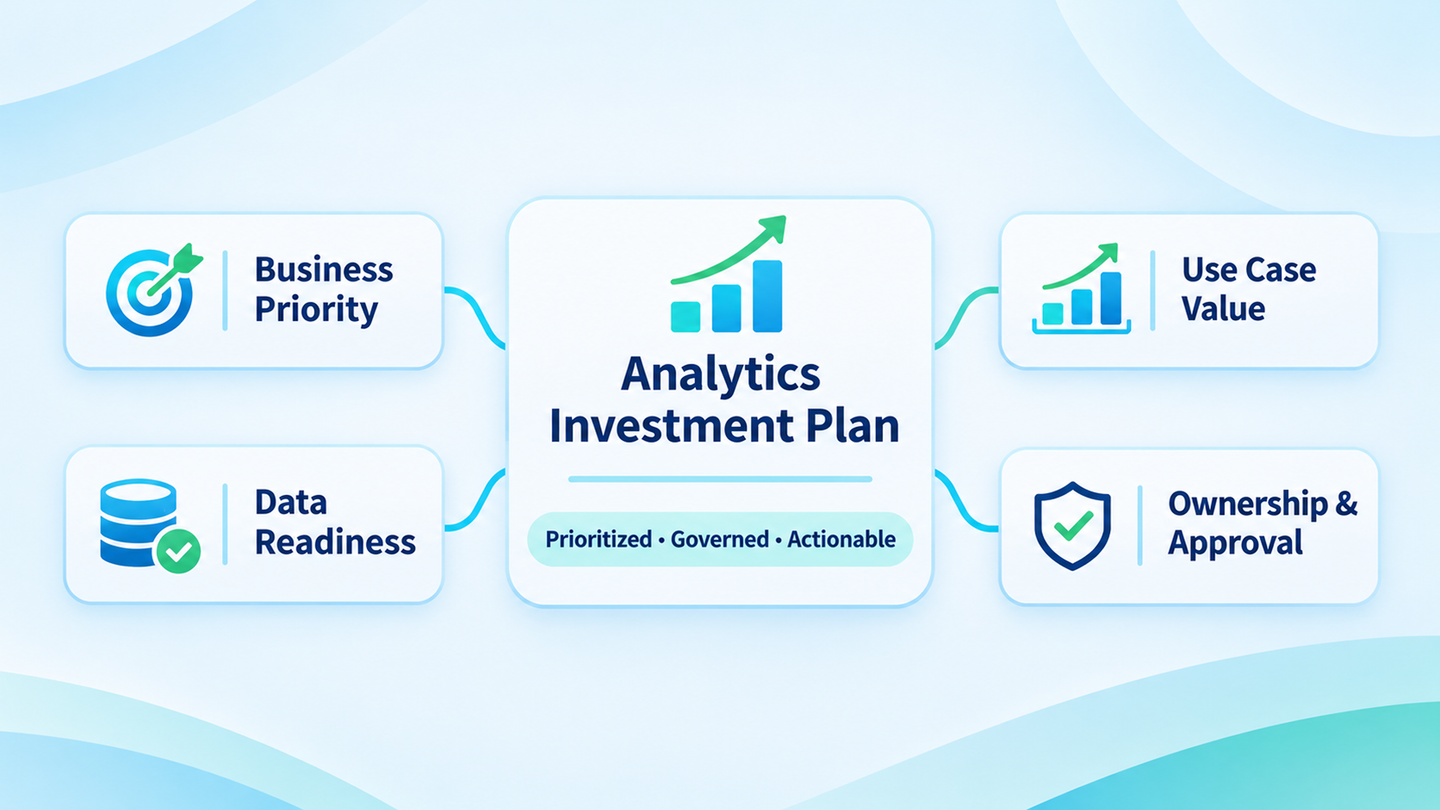
Analytics investment planning makes those choices visible. It identifies what each proposal supports, what evidence justifies funding and which prerequisites affect the sequence. The CIO can then compare initiatives together rather than treating every request as an isolated technology purchase.
This playbook provides a practical structure for that executive discussion. It distinguishes continuity, improvement, enablement and exploration, with review conditions appropriate to each. Business sponsors remain accountable for realizing the intended value, while the CIO coordinates the technology investment and delivery dependencies through the enterprise’s existing approval process.
The portfolio question for the executive team
Bring finance and business sponsors into the review before individual proposals become fixed commitments. Agree which operating priorities must be supported in the planning period, then identify the technology and analytics prerequisites. Compare the portfolio against both available funding and the people who will deliver and maintain it.
The CIO should be able to explain why a proposal is funded now, which option was selected and what evidence will justify the next commitment. A good decision can include an essential renewal, a focused improvement and a bounded experiment. Their purposes differ, so the review criteria should reflect that difference.
Start with business commitments for the planning period
Ask business leaders which decisions and operating changes matter in the next period. The answer might include integrating a new business, improving service performance or preparing a different commercial coverage model. Map analytics requests to those commitments.
Distinguish a named business requirement from a general expression of interest. A proposal to support the next acquisition review has an identifiable user and milestone. A proposal to explore conversational analytics may require a bounded discovery stage before the organization can assess a larger investment.
Gartner’s conference topics connect strategic spending and modernization with business outcomes. In portfolio planning, that connection should appear in the proposal itself through a specific decision owner and intended use.
Separate different investment purposes
Classify proposals so the review recognizes what each is intended to achieve. Some maintain a required capability, some improve an existing process and others test a new opportunity. An enabling investment may support several future projects without producing a stand-alone revenue result.
Use the categories to ask appropriate questions. A continuity requirement needs evidence of the business service that depends on it and the alternatives available. An exploratory AI use case needs a limited scope, learning objective and next funding decision.
Avoid forcing every proposal into an identical short-term return claim. That can encourage speculative revenue estimates for foundational work. Instead, identify the evidence that would justify this stage of the investment and the conditions for continuing it.
Use a common proposal record
A consistent record makes differences easier to examine. Keep the initial version brief enough for sponsors to complete, then request more detail where the decision requires it.
| Proposal field | Question the sponsor should answer |
| Business purpose | Which operating commitment does this support |
| Accountable user | Who will use the capability and approve its usefulness |
| Evidence | What demonstrates the current need |
| Dependencies | What must be ready before the benefit can be realized |
| Resources | Which money and team capacity are required |
| Review condition | What will justify the next stage of funding |
Record assumptions alongside the proposal. A simple statement that business owners have not yet approved the metric definition is useful planning information. It tells the portfolio review what needs to happen before broader delivery funding makes sense.
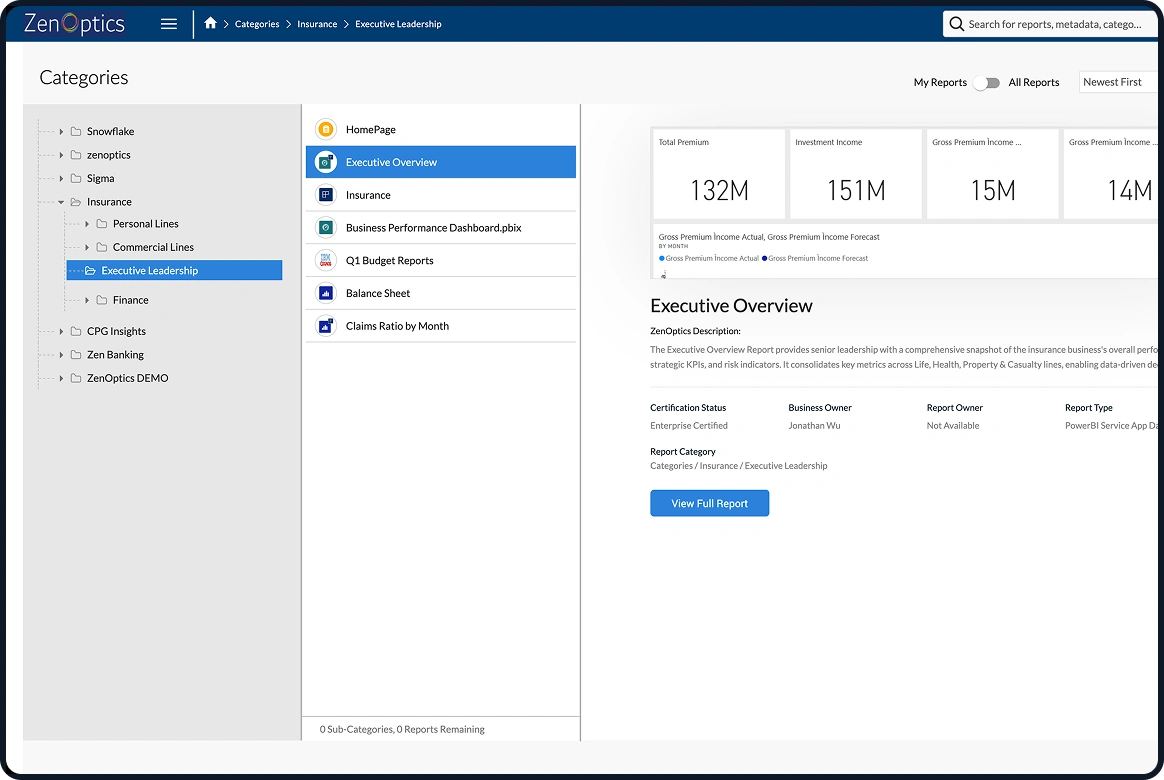
Connect proposals with the analytics estate
Review the assets and capabilities the enterprise already has. A proposed dashboard may overlap with a maintained report. An assistant may need definitions and access arrangements that another initiative is already preparing.
ZenOptics Atlas supports visibility and governance across analytics assets. That can provide evidence for portfolio discussion, including where an existing asset may be reusable. It does not determine whether a proposed investment is financially justified.
The existing analytics modernization article explains the estate foundation. Use it as supporting reading while keeping this review focused on funding choices, prerequisites and timing. The portfolio should make those connections visible to decision makers.
Identify the dependencies that determine sequence
Draw the practical relationships among proposals. A review workflow may depend on an approved KPI. A platform exit may depend on acceptance of replacement reports. A cross-business analytics assistant may depend on an agreed view of customer identity.
Distinguish an essential prerequisite from an improvement that can proceed in parallel. The organization may be able to pilot an assistant in one reviewed domain while broader definition work continues elsewhere. It may also discover that a planned renewal decision comes before the proposed migration can be safely completed.
Record these timing constraints with the owners who can verify them. A dependency should change the funding or delivery plan, rather than remain a footnote in a project description.
Evaluate value using visible assumptions
Describe whether the benefit reduces current spending, avoids future spending, releases capacity or supports a business outcome. Keep those categories separate so finance can evaluate them appropriately.
For a report preparation improvement, estimate the work currently performed and the portion expected to change. For a platform proposal, include transition and operating costs alongside subscription charges. State how the benefit will be observed after delivery.
FinOps unit economics guidance provides context for relating technology cost to meaningful units. In analytics planning, the unit could be a completed review process or an actively maintained service. Choose one that helps a manager compare options without rewarding unnecessary activity.
Compare options within each proposal
Ask the sponsor to describe a proportionate alternative. The enterprise might extend an existing capability, implement a focused improvement or defer a broader change while completing a prerequisite. A new purchase should be compared with a credible operating option.
Include the consequences of timing. Deferring a platform change could preserve continuity but require another contractual commitment. Advancing an AI use case could create value sooner if the evidence domain is ready, while expanding too broadly may increase review work.
The purpose is to make the tradeoff inspectable. The portfolio review should understand what the organization gains, commits to and needs to manage under each option. A single preferred proposal without its alternative can conceal those choices.
Use a worked portfolio conversation
Consider an illustrative planning period with three requests. The first concerns a BI contract approaching renewal. The second proposes an AI-assisted quarterly review. The third supports management reporting after an acquisition.
The renewal may need an early decision because its contractual deadline precedes the budget period. The QBR pilot may proceed within a reviewed revenue domain. The acquisition work may need a shared KPI bridge before leaders can compare the businesses.
The resulting plan could fund a focused renewal assessment, a bounded QBR preparation pilot and an initial acquisition reporting domain. That is one example of sequencing, not a recommendation for every enterprise. The useful outcome is a portfolio that reflects actual dependencies rather than three disconnected project approvals.
Include the operating capacity needed after launch
Estimate the business and technical effort required to maintain the investment. Definitions need owners, workflows need review and new reports need support. Those responsibilities should have capacity in the operating plan.
AFP’s finance business partnering overview supplies context for bringing financial analysis into business decisions. In portfolio planning, involve finance in benefit assumptions and business leaders in the work required to realize them.
ZenOptics Nexus organizes business context from governed metadata. Where a proposal depends on that context, budget for the people who will review and maintain it. Treating curation as an invisible resource can make a project appear more complete than it is.
Review AI proposals through the intended use
Identify the task an assistant will perform and the actions it may influence. A draft analysis for an internal reviewer differs from an autonomous external action. The evidence and approval requirements should follow that use.
NIST’s AI Risk Management Framework provides a voluntary risk reference. Ask each AI sponsor to explain the relevant tests, supervision and unresolved questions before expanding funding. A limited discovery budget may be appropriate when those details still need evidence.
Connect the investment with its workflow. ZenOptics Maestro supports structured analytical processes and decision provenance. Evaluate how that operating requirement fits the proposed use case rather than assuming every analytics investment needs the same workflow scope.
Make renewal dates part of the portfolio calendar
Bring commercial deadlines into planning early. Identify when decisions are needed, which options remain available and what evidence must be ready before those dates. The detailed BI renewal article develops a practical sixty-day example for that assessment.
FinOps guidance on licensing and SaaS provides context for evidence-informed renewal choices. Portfolio planning connects those choices with business priorities and delivery capacity across the enterprise.
An acquisition creates a different timing question: what management view is needed soon after close, and which systems can remain separate for a period? The acquisition integration article addresses that sequence. Both situations benefit from the same portfolio discipline while requiring different detailed plans.
Revisit the funding decision as evidence improves
Set a review point for each funded stage. The sponsor should return with the evidence promised, including operating costs, user acceptance and changes to key assumptions. Continue, adjust or conclude the work based on that evidence.
Keep the portfolio record current when business priorities change. A deferred project may become more valuable after another initiative completes its prerequisite. A pilot may reveal a narrower opportunity than the original proposal suggested.
Begin the next planning discussion with a small set of real proposals and their dependencies. Contact ZenOptics to explore how visibility into analytics assets, business context and workflows can inform the evidence behind those choices.
The CIO action agenda
Leave the portfolio review with a funded sequence, named business sponsors and explicit conditions for the next funding decision. Review capacity and dependencies when priorities change. Ask each sponsor to return with the evidence promised, including operating responsibilities and user acceptance. The CIO can then reallocate the next analytics dollar with a clear account of what the previous commitment has established.
Frequently asked questions
What is an analytics investment portfolio?
It is the coordinated set of analytics initiatives and operating commitments an organization funds, with their purposes, dependencies and review conditions.
Should every project promise a financial ROI?
Each should justify its purpose and stage of funding. Continuity, enablement and exploration require evidence appropriate to their role, rather than invented revenue claims.
How should AI projects be prioritized?
Assess the business task, evidence readiness, consequences, operating costs and acceptance criteria alongside other portfolio commitments.
How often should the portfolio be reviewed?
Align reviews with budgeting, material business changes and project funding decisions. Contract deadlines may require earlier action.
Published November 5, 2026Analytics Investment Planning and the CIO Playbook
Decide where your next analytics dollar should go. A CIO playbook for investment choices, business value, dependencies, operating capacity, and scheduling a call with ZenOptics.
Schedule a 15min demo call