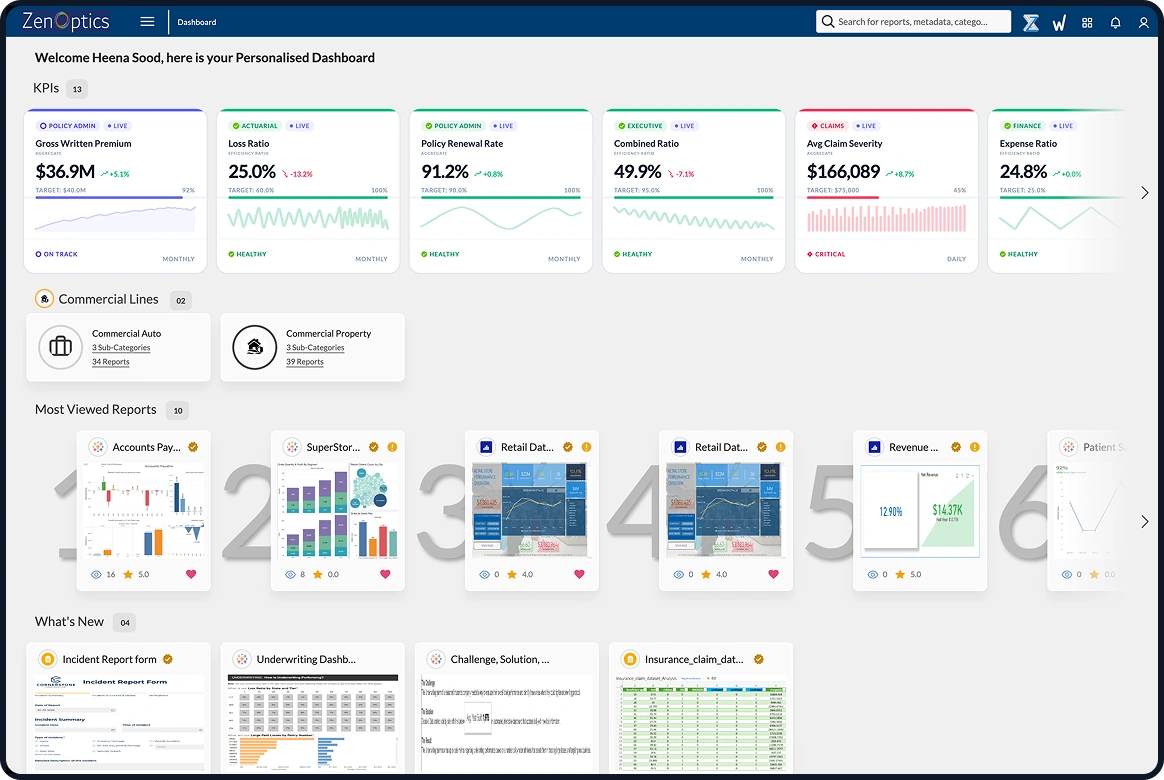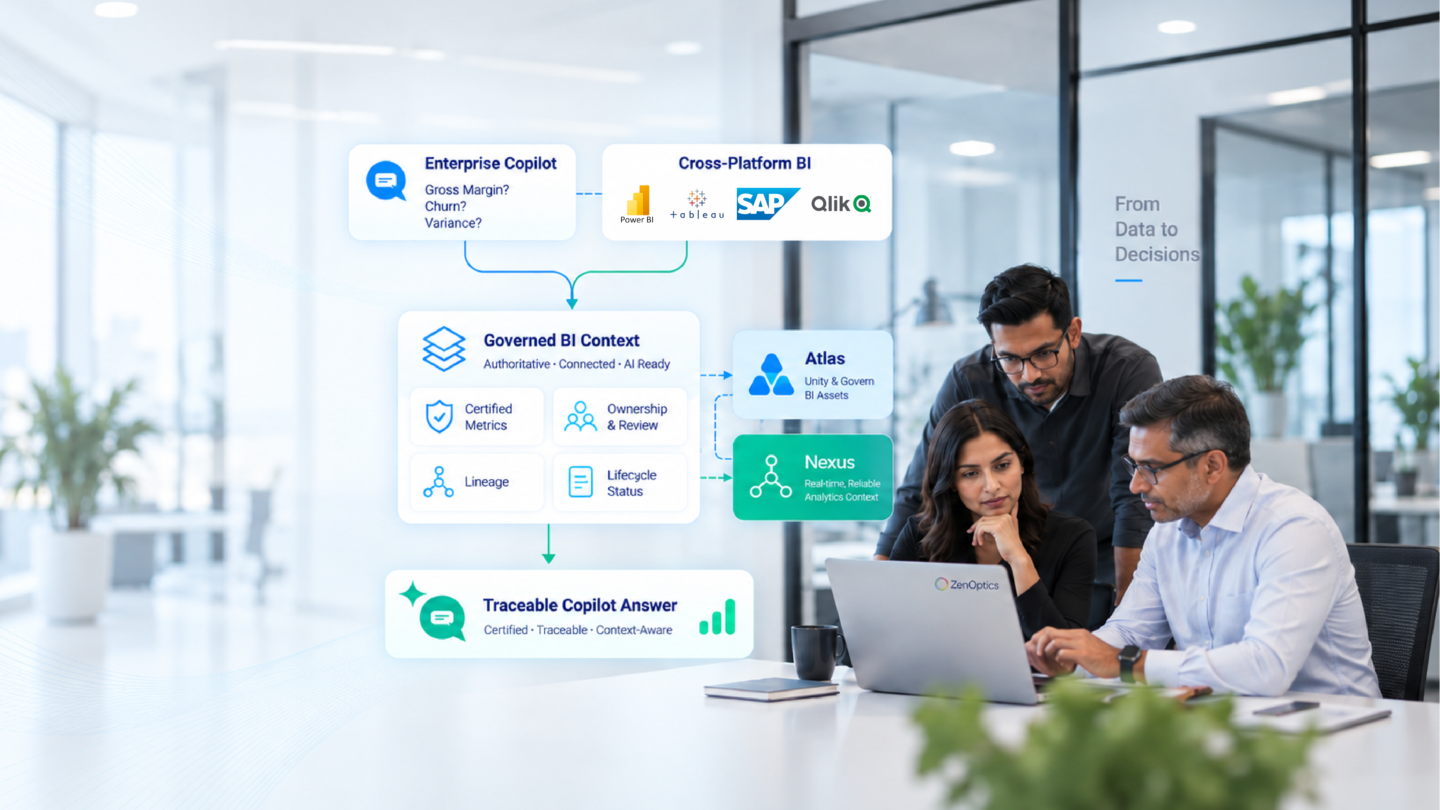


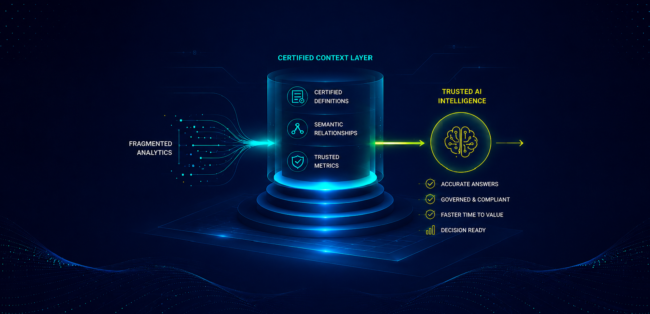
Most enterprises running analytics AI pilots already have what they need to succeed. Certified metrics, governed dashboards, business-owned KPI definitions: the building blocks exist inside their current BI tools. The problem is not a lack of AI capability or compute. It is that the analytics estate underneath has never been organized to make those assets findable, trustworthy, or machine-readable. Analytics modernization is not about replacing what is already in place. It is about making what already exists work for AI.
The AI Pressure Your Analytics Estate Was Not Built For
Enterprise AI investment has accelerated sharply over the past two years. The analytics infrastructure underneath it has not kept pace. Gartner is direct on what follows: through 2026, organizations that do not support their AI use cases through an AI-ready data practice will see over 60% of those projects fail to deliver on business SLAs and be abandoned.
The failure pattern is consistent. An AI tool gets provisioned. It connects to the BI stack. It returns answers. Those answers disagree with the dashboard the CFO trusts. The dashboard disagrees with the metric definition the RevOps team uses. Nobody knows which version is authoritative. The AI project stalls. Not because the AI underperformed, but because the analytics estate gave it nothing reliable to ground in.
That is the real starting-line problem. AI is not the bottleneck. The BI estate is.
What Analytics Modernization Actually Means in 2026
The phrase "analytics modernization" has accumulated enough usage that it covers nearly anything. For some organizations, it means migrating from Tableau to Power BI. For others, it means adding a new cloud data platform. Both are infrastructure decisions. Neither addresses what AI actually needs from the analytics layer.
Analytics modernization, properly understood, is the work of making a BI estate trusted, governed, and machine-readable. Several conditions have to hold for that to be true.
Someone must know what analytics assets exist across every BI tool in the organization, not just the ones actively maintained, but the full inventory including reports nobody touches and dashboards that sit on servers nobody reviews anymore.
A subset of those assets must be certified as authoritative. There is a version of "pipeline" the VP of Sales trusts and a version the finance team uses. Modernization means resolving that disagreement at the source and making the resolution permanent.
The certified estate must be structured in a way AI can read. Business definitions, KPI ownership, relationships between metrics, usage patterns: this context has to exist in machine-readable form before any AI workflow can act on it reliably.
The organization needs to be able to deploy AI on that foundation and trace every AI-driven decision back to the certified, governed analytics that informed it.
The sequence for getting there: inventory, certify, contextualize, activate. Each step depends on the one before it.
Four Signs the BI Estate Is Blocking AI
Most analytics leaders recognize the symptoms before they can name the cause.
Conflicting KPI definitions across tools are the most common signal. When "churn" means one thing in the Salesforce dashboard and something different in the analytics platform, AI tools produce different answers to the same question. Neither answer is wrong according to its source. Both are useless for making a confident decision.
Analytics nobody trusts are the second sign. Organizations implementing ZenOptics typically see 30 to 40 percent of their analytics estate comprised of duplicate or conflicting reports. Most of those reports are never used, but they are never retired either. They accumulate, create noise, and make it harder to identify which assets are actually authoritative.
No structured inventory is the third signal. Most BI leaders know which tools their organization runs. Far fewer have a complete, current picture of every report, dashboard, and KPI definition those tools contain, including who owns each asset, when it was last validated, and whether it is actively used. AI cannot operate reliably from an uncharted estate.
AI that produces unverifiable answers is the fourth. When an AI tool surfaces an insight and nobody can trace which metric it came from or whether that metric is authoritative, the insight cannot be acted on by any team that cares about accountability. That traceability gap is a modernization gap.
The Modernization Framework: Inventory, Certify, Contextualize, Activate
Step 1: Inventory
The starting point is an honest accounting of the analytics estate. Every BI tool, every report, every dashboard, every KPI definition: surfaced, categorized, and assessed for usage, ownership, and duplication. This is not a one-time audit. The inventory has to stay current as the estate changes, which means it needs to be continuous and automated rather than a periodic spreadsheet exercise.
Organizations implementing ZenOptics typically see 20 to 40 percent faster analytics discovery as a direct result of this layer, because the estate becomes searchable and structured rather than scattered across tool-specific libraries with no cross-tool visibility.
Step 2: Certify
Once the inventory exists, certification begins. Which assets are authoritative? Which KPI definitions are official? Which dashboards carry the organization's trust?
Certification is not a stamp applied once and forgotten. It is an ongoing governance practice: validating, approving, and assigning ownership to analytics assets so that every downstream user, and every AI tool, knows which version to rely on.
Step 3: Contextualize
A certified analytics estate is not automatically machine-readable. AI tools need more than data. They need business context. What does "net revenue" mean in this organization? Which pipeline metric is authoritative for Q3 forecasting? How does "customer" differ between the acquisition team's definition and the finance team's definition?
Context is what turns a certified metric into something AI can reason about. Without it, AI grounding fails. The model fills in gaps using probability rather than business meaning, and the result is an answer that sounds confident but is not grounded in how the organization actually measures itself.
Step 4: Activate
With inventory, certification, and context in place, the analytics estate is AI-ready. AI copilots and agents can operate on that foundation and produce outputs that are traceable, verifiable, and aligned with how the organization defines its own metrics and decisions.
Activation is not the starting point. It is the outcome of the first three steps done correctly.
How the Platform Architecture Maps to Each Stage
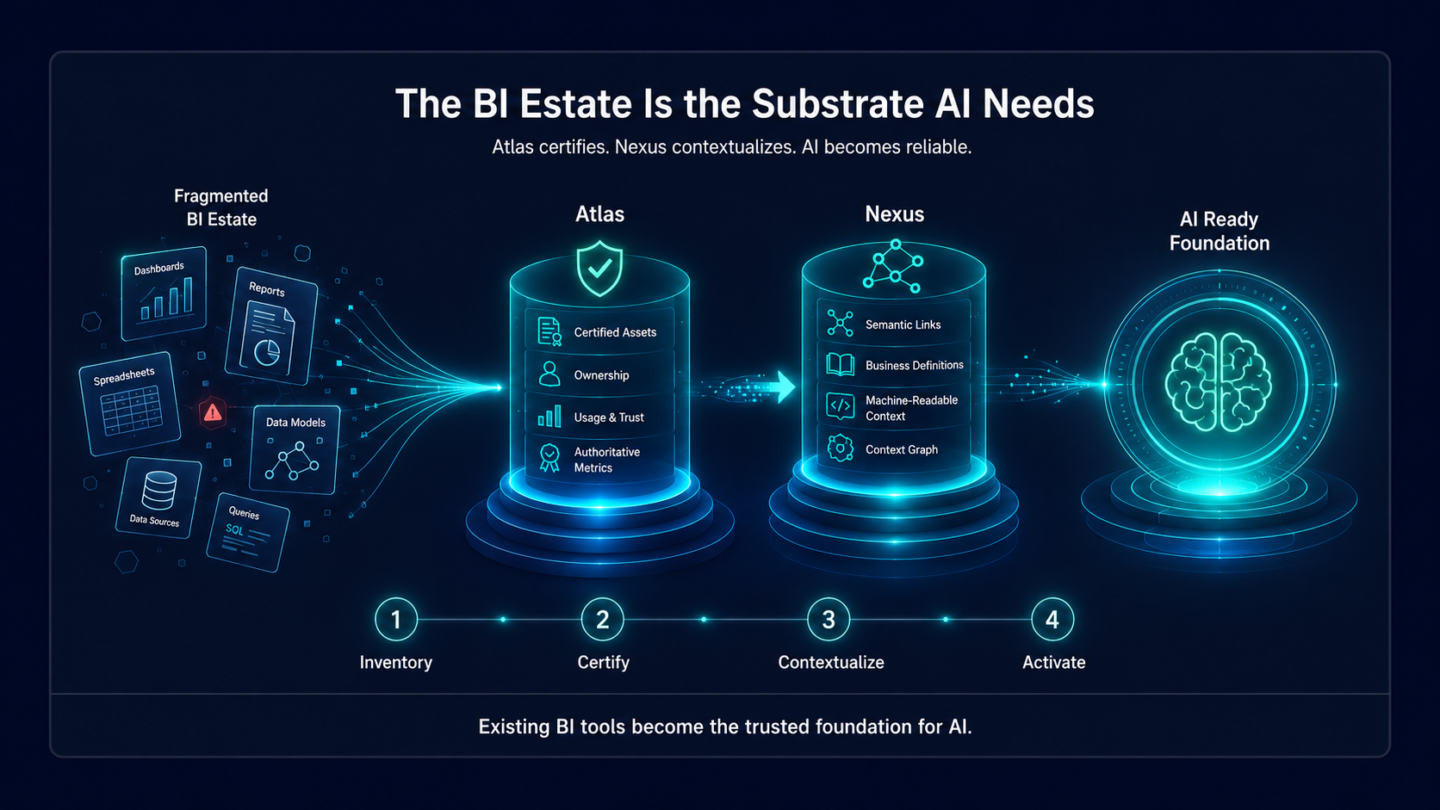
Atlas handles inventory and certification. As the Analytics System of Record, it provides a single, trusted view of every analytics asset across the BI ecosystem, organized by ownership, certification status, usage, and business domain. It governs which metrics are authoritative and keeps that governance current as the estate evolves. The platform works across existing BI tools, including Power BI, Tableau, and Looker, without requiring those tools to be replaced.
Nexus handles contextualization. It turns the certified analytics estate that Atlas governs into machine-readable business context, automatically deriving the definitions, relationships, and semantic structure AI needs to operate reliably. The context work is automated rather than built by hand for each tool or workflow.
Together, Atlas and Nexus take an organization from an uncharted BI estate to a certified, AI-ready analytics foundation. The BI tools already in place become the substrate for AI rather than the obstacle to it.
What Modernization Delivers in Practice
The outcomes show up in measurable ways before AI is ever deployed.
Brown-Forman operates across 170 countries with more than 40 brands and a reporting environment that spanned Tableau, SAP BusinessObjects, SAP BW, and several other tools. Before modernizing, fewer than 20 percent of users were confident they knew what reporting was available to them. After establishing a governed, unified analytics estate through ZenOptics, report access and usage increased 27 percent year over year, the active user base grew 25 percent year over year, and the organization achieved an estimated 30 percent reduction in reports by eliminating duplicates and consolidating overlapping assets.
Janney Montgomery Scott, a financial services firm with more than 2,000 employees and $124 billion in client assets under advisement, faced a fragmented BI environment across SSRS, MicroStrategy, ThoughtSpot, and SharePoint. Content was siloed by platform and department with no way for users to discover what existed. The BI team regularly spent time building reports only to discover the asset already existed. After modernizing with ZenOptics, all BI content became searchable and accessible from a single governed platform. Report certification and a standardized glossary brought consistency across departments. The team now searches for existing assets before building anything new.
These results arrive before AI is introduced. The governance work has standalone value. The AI payoff comes after.
The Connection to AI Scale
An organized, certified, contextualized analytics estate is the prerequisite for AI that works at enterprise scale. The analytics AI value gap most organizations experience is not a model problem or a compute problem. It is an estate problem. The AI tools are ready to work. The BI estate is not ready to support them.
Analytics modernization closes that gap, not by replacing the tools an organization has already invested in, but by governing and contextualizing what those tools already contain. The starting line for AI is a trustworthy, machine-readable analytics estate. Most enterprises have the ingredients. They have not yet assembled them.
Frequently Asked Questions
What is analytics modernization? Analytics modernization is the process of making an enterprise BI estate trusted, governed, and machine-readable. It involves inventorying every analytics asset across BI tools, certifying which assets are authoritative, structuring business context so AI can use those assets reliably, and activating AI workflows on that governed foundation. It is distinct from tool migration: modernization is about the governance and structure of the estate, not the replacement of the tools it runs on.
Why does analytics modernization matter for AI? AI tools ground their outputs in whatever analytics information is available to them. When that information is unstructured, duplicated, and ungoverned, AI answers are unreliable. Gartner projects that through 2026, organizations without an AI-ready data practice will see over 60 percent of AI projects fail to deliver on business SLAs. Analytics modernization establishes the foundation AI needs to produce answers that are traceable, verifiable, and consistent with how the business defines its own metrics.
What is the difference between analytics modernization and BI tool migration? BI tool migration is a technology infrastructure decision: moving from one platform to another. Analytics modernization is a governance and structure decision: organizing what the BI estate contains so users and AI tools can trust and use it. Modernization can happen across a multi-tool environment without replacing any existing BI investment.
What is an analytics system of record? An analytics system of record is a single, authoritative source for every certified analytics asset in an enterprise: reports, dashboards, KPI definitions, and their ownership, lineage, and certification status. It is what makes it possible for every team, and every AI tool, to start from the same trusted data rather than from conflicting versions scattered across different BI tools.
How does ZenOptics support analytics modernization? ZenOptics provides the platform architecture for analytics modernization across two layers. Atlas serves as the Analytics System of Record: inventorying, certifying, and governing every analytics asset across the existing BI ecosystem without requiring tool replacement. Nexus converts that certified estate into machine-readable business context so AI tools have the grounding they need to produce trusted, decision-ready outputs.
What is the four-step analytics modernization framework? The four steps are: inventory (know what analytics assets exist across every BI tool), certify (establish which assets are authoritative and owned), contextualize (structure the estate so AI can read and ground in it), and activate (deploy AI workflows on a governed, trusted foundation). Each step depends on the one before it. Organizations that attempt activation without the first three steps in place are the ones most likely to experience AI project abandonment.
Published May 11, 2026Analytics Modernization in the AI Era
Turn your existing BI estate into an AI‑ready, trusted analytics foundation. See how Atlas and Nexus help you inventory, certify, and activate the metrics your teams already rely on.
Book a 15‑Minute Consultation