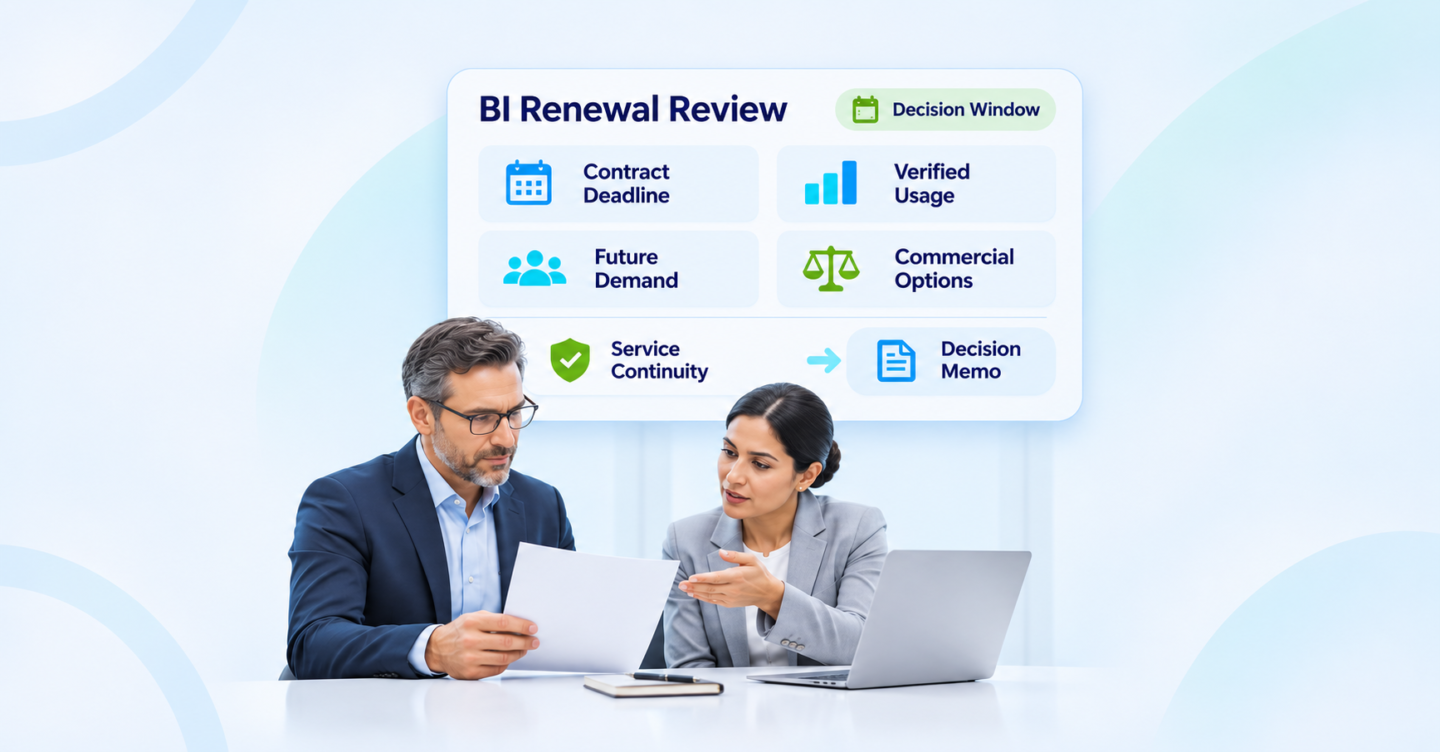


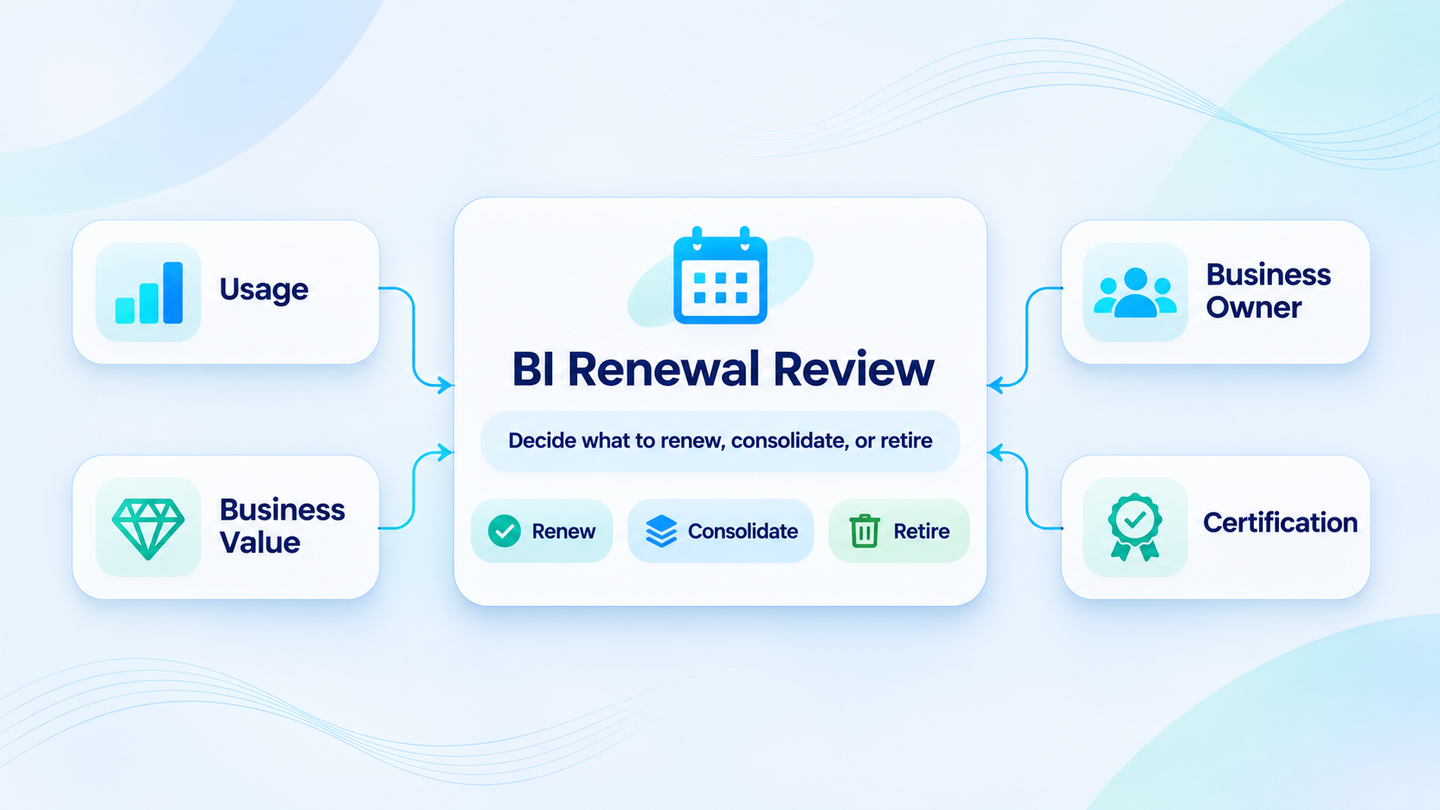
A BI renewal is an opportunity for the CIO to align the next commercial commitment with what the business needs from analytics. The decision brings together current reporting services, expected demand, platform plans and the evidence needed to compare practical options.
The CIO should ask which capabilities must continue, what purchase scope fits the requirement and whether a proposed transition is sufficiently ready to influence this renewal. Procurement manages the commercial process. Business and platform owners validate the operating assumptions. The executive decision connects their evidence with the wider technology plan.
This playbook uses an illustrative sixty-day assessment window to organize that work. Begin earlier wherever actual notice periods, internal approvals or transition requirements demand it. The first step is to confirm the contract dates that determine when decisions must be made. The aim is an evidenced choice with a clear operating plan.
Use the renewal as an executive portfolio decision
Confirm how this renewal fits the enterprise roadmap. A proposed platform exit needs evidence from delivery teams, while planned business growth needs an approved demand assumption. Ask procurement to identify feasible commercial choices and finance to make their costs comparable.
The CIO’s recommendation should state the required service, the chosen commitment and the conditions that could change the plan. Preserve reporting continuity while the organization pursues longer-term improvements. The assessment can create strategic value through a better-supported choice even when retaining the current platform is the appropriate outcome.
Start with the date that changes your options
Ask procurement or the authorized contract owner to confirm the renewal date, notice requirements and approval path. Record the dates for requesting changes, making a decision and completing any required communication.
Do not assume that the renewal anniversary is the final decision date. The contract may require earlier action, and internal review may need additional time. Base the plan on the actual agreement and the people responsible for interpreting it.
Assign one coordinator for the assessment. Procurement owns the commercial process, while BI leaders and business owners supply operating evidence. A shared timetable prevents a useful usage assessment from arriving after the relevant decision has already been made.
Establish the service the business is renewing
List the business activities the platform supports. Include reporting creation, report consumption, scheduled distributions and any applications that embed its outputs. Name the owners of critical processes and the periods when those processes matter most.
Distinguish the capabilities required from the way they are currently purchased. A business may need broad report access while only a smaller population creates content. The commercial implications depend on the vendor’s actual licensing terms, so verify them before translating roles into a purchase quantity.
FinOps guidance on licensing and SaaS provides a reference for bringing usage evidence into licensing decisions. The assessment should connect that evidence with the enterprise’s specific service requirements.
Use the first stage to assemble evidence
In an illustrative sixty-day plan, begin by collecting the contract, current entitlements and available usage records. Record how recently the data was collected and which activities it captures. Identify gaps before using the records to propose a reduction.
Include platform administration, business support and integrations in the evidence set. Scheduled work or embedded access may not appear in a simple login report. Ask the platform owner how service accounts and shared access are represented.
ZenOptics Atlas supports analytics inventory and usage visibility where the source integration supplies it. That can contribute to the assessment. Contract entitlements and invoices still need to be verified through the organization’s commercial records.
Validate the user and workload populations
Group users according to what they actually need to do, then verify the relevant commercial categories. Identify inactive accounts, seasonal users and people whose access has changed. Confirm the business requirements before proposing removal.
Investigate workloads that create capacity demand. A report family might run frequently for a legitimate operational purpose or use a schedule that can be adjusted. Determine which changes would affect the contract or consumption costs in practice.
FinOps usage optimization guidance supplies context for matching resources with actual need. The renewal team should preserve the required business service while testing whether a more appropriate configuration or quantity is available.
Ask business owners about the next contract period
Current usage is only part of the forecast. Ask whether headcount, acquisitions, reporting scope or planned applications will change demand. Identify the assumptions that have an approved business basis and those that remain uncertain.
Record the timing of changes. A planned migration may not be ready at the start of the contract period. A new operating unit may need access later. Those details can influence the commercial options procurement asks the vendor to evaluate.
Keep the forecast visible in the decision memo. A quantity based on uncertain growth should be distinguishable from a confirmed operating requirement. This makes later review more useful when actual demand differs from the plan.
Compare feasible commercial and operating options
Develop a small set of options supported by the available evidence. The organization might retain the current arrangement, adjust entitlements or negotiate an arrangement that supports a staged transition. Availability depends on the contract and vendor, so treat each as an option to verify.
Include continuity requirements and the effort needed to move. A cheaper headline price does not establish a better outcome if the alternative requires significant rebuilding, training or parallel operations. Conversely, a familiar renewal should still explain why the purchased scope matches the business need.
FinOps for SaaS provides broader context for coordinating procurement and operating stakeholders. Use that perspective to make the comparison cross-functional rather than leaving the decision to the team with the invoice alone.
Test a transition option before relying on it
If the proposal assumes that workloads will move, ask the delivery owner for acceptance evidence and realistic dates. Identify the reports, distributions and user tasks that must continue. Confirm whether the alternative supports the required business cycle.
Use the existing analytics modernization guide for the broader estate work. The renewal assessment should focus on whether the transition is sufficiently evidenced to influence this commercial decision.
Explain what happens if delivery takes longer. The plan may require a verified extension option, a revised scope or a different sequence. The team should understand that contingency before treating the transition as a firm basis for reducing the renewed service.
Prepare a concise renewal decision memo
Use a common memo so the approver can see the evidence and the recommendation together. Keep supporting records available for inspection.
| Memo field | Evidence needed |
| Decision and deadline | Contract event and authorized approval date |
| Required service | Business activities and critical reporting cycles |
| Current position | Entitlements and verified usage coverage |
| Future demand | Approved changes and uncertain assumptions |
| Options | Cost scope continuity and transition effort |
| Recommendation | Preferred option with conditions and next review |
The memo should state which commercial details require confirmation. It should also identify the owner responsible for carrying out the approved choice. A decision that changes access needs an operating plan after the contract discussion ends.
Evaluate cost on a comparable basis
Compare options over the same period and include relevant implementation and operating costs. Explain whether a benefit reduces current spending or avoids a future increase. Keep one-time transition costs separate from recurring commitments.
FinOps unit economics guidance provides a reference for relating cost to a useful service unit. For this decision, the unit might be an active business reporting service or an appropriate user population. Select it with finance and explain the limitations.
Avoid attributing the full benefit of a broader modernization program to the renewal alone. If a project releases maintenance capacity, show how that relates to the proposed commercial change. The approval should remain understandable without combining unrelated benefits.
Use the final stage for approval and execution
Bring the recommendation to the authorized approver with enough time to resolve material questions. Procurement confirms the commercial terms through its established process. The operating owner confirms that any changes to access or service can be implemented as planned.
ZenOptics Maestro supports structured reviews and approval workflows. A renewal assessment could use a configured workflow to coordinate the analytical evidence and decision record. It does not replace procurement systems, contract interpretation or negotiation authority.
Maintain the record of the approved choice and its assumptions. Future reviewers should be able to distinguish a deliberate capacity buffer from an overlooked inactive population. That explanation supports a more informed assessment at the next renewal.
Review the decision after the change takes effect
Preserve the distinction between the approved purchase and the access changes needed to implement it. A revised entitlement does not automatically remove a former employee’s account, update a service connection or confirm that a business owner received the required access. Assign those tasks through the appropriate administrators and record their completion. Verify license assignment and reassignment rules through the actual agreement rather than assuming all unused access can be transferred freely.
Check the quality of the evidence collected during the assessment. If a usage extract omitted embedded reporting, record how the gap was discovered and how the next review will include it. If a growth estimate was too broad, retain the business assumption and the actual demand. This makes the next renewal more informed without requiring the team to repeat the same discovery work.
Finally, agree a monitoring point between renewals. A material acquisition, service change or planned migration may alter requirements well before the next commercial anniversary. The platform owner should know when to bring the issue back to procurement and finance. A current decision record and calendar make that conversation easier to start while options remain available. Keep the operating service owner involved so a commercial adjustment remains connected to the reporting the business needs.
Check whether access changes were completed and critical reporting continued as expected. Compare demand with the forecast and investigate material differences. Include user feedback where a change affects how people consume reports.
Keep the renewal calendar current throughout the year. Gartner’s conference cost management topics provide the CIO context. The organization’s own evidence determines the commercial decision.
Begin with one upcoming renewal and the actual dates that control it. Contact ZenOptics to discuss how analytics visibility and structured reviews could improve the evidence available to your procurement and BI teams.
The CIO action agenda
Take a recommendation to the authorized approval forum before the relevant deadline, with verified contract facts and a confirmed continuity plan. Assign responsibility for implementing any entitlement or access changes. Set a review after the change takes effect and retain the assumptions for the next renewal. This keeps the executive decision connected to both commercial execution and the reporting service.
Frequently asked questions
Is sixty days enough for a BI renewal review?
It is an illustrative window. Start earlier where contract notice periods, internal approvals or transition requirements need more time.
Can login data determine how many licenses to renew?
It is one input. Validate role needs, seasonal use, embedded access and the relevant contract terms before changing quantities.
Does report retirement automatically reduce licensing costs?
No. The impact depends on the commercial model and actual service changes. Verify it before claiming a saving.
Who should approve the recommendation?
Follow the organization’s authority model, with procurement, finance, platform owners and affected business owners providing the evidence relevant to their responsibilities.
Published November 9, 2026Turn Your Next BI Renewal into a Strategic Advantage: A CIO’s 60-Day Playbook
A BI renewal is more than a procurement deadline it is a chance to align licensing, business demand, and analytics strategy. This CIO playbook provides a practical 60-day approach to contract dates, usage evidence, future demand, commercial options, transition readiness, and reporting continuity. Schedule a call with ZenOptics to strengthen the evidence behind your next BI renewal decision.
Schedule a 15min demo call